Category: Duncan Fleming

  • The Abramelin Method

    Duncan Fleming

    The instruction to develop a personal connection with one’s Holy Guardian Angel is a fundamental part of the Tradition. Highly relevant to this work is a grimoire, or book of magic, possibly dating from the 15th century, titled The Book of Abramelin. It recounts the author’s travels from Europe to the Middle East in search of true magic and his eventual encounter with a wise teacher named Abramelin, who showed him the powerful initiatory method described in the book.

    This method has become established as a blueprint for establishing contact with the Holy Guardian Angel. The method described in the book is an extended spiritual retreat. Not everyone who attempts the Abramelin operation will succeed, and there are no guarantees that simply following the instructions will lead to the knowledge and conversation of one’s Holy Guardian Angel. The text itself states that success depends primarily on the sincerity of intention. The practice involves entering a partial, and then progressively more complete, state of seclusion over a period of months.

    Photo of two books of Abramelin translation in English


    In the best available translation of The Book of Abramelin, this process lasts eighteen months. For many years, however, the only widely available version described a six-month operation, and so the shorter form has been used by many practitioners. This seclusion is not a form of self-punishment; it is undertaken because being around other people tends to keep us the same. People naturally chatter and engage in small talk. Simply performing the necessary interactions of work, social, and daily tasks can be a distraction and hinder the process of inner change. The everyday world can add weight and gravity that slow this process down. Therefore, genuinely entering retreat can serve as a catalyst for personal transformation. But, of course, isolation for its own sake is neither a healthy purpose nor a positive aim in itself.

    Another practical consideration of the Abramelin method is that it is best to begin the operation in the spring. This is because, symbolically, spring marks the start of new endeavours and the astrological year, and because our bodies tend to be happier in the warmer months, surrounded by blooming life and the fertility of nature, making it an ideal time to begin. And so the process becomes gradually more demanding. The operation begins with regular prayer, devotional discipline, and moral restraint, alongside the preparation of oneself and one’s environment for sacred work. Periods of withdrawal and solitude increase over time, as do requirements concerning cleanliness, simplicity of diet, and sexual continence. Specific prayers are performed at set times, and certain sacred objects are prepared according to instruction. As the operation progresses, the practitioner moves toward near-complete seclusion, with the whole of daily life ordered around prayer and consecration. After several months, the work culminates in an intense and sustained state of ritual focus, in which ordinary activities are subordinated to the single aim of attaining knowledge and conversation with the Holy Guardian Angel.

    In the Abramelin operation, contact with the Holy Guardian Angel is not the final step. Following this, the operator is required to evoke various unredeemed spirits and compel their obedience, not by personal force but by the authority of the Angel. This act is presented as a necessary integration of the work, establishing proper order among the human soul, the divine intermediary, and the lower spiritual forces. Only after this submission is achieved can the operation be considered complete, at which point the practitioner is said to have secured a stable condition of spiritual governance intended to guide their conduct and magical practice for the remainder of their life.

    The redoubtable magus Aleister Crowley attempted the Abramelin ritual. He began his preparations in London and then decided to continue the process in Scotland. He purchased Boleskine House on the shores of Loch Ness for this very purpose. Whether or not he eventually succeeded in attaining the knowledge and conversation of his Holy Guardian Angel using a different approach later on, he abandoned this particular Abramelin operation partway through. And this was someone who was wealthy and, by all accounts, fully dedicated to the Work of being a ritual magician. So, despite his faults, if anyone were likely to complete the Abramelin process, it would be him. Yet, he did not manage to pull it off, at least in this attempt.

    So, I apologise to Abramelin enthusiasts if I sound facetious. I genuinely respect and admire those who have followed this method as closely as possible in its traditional form. My point is that the further we move from the 15th century, the more challenging it becomes to follow the Abramelin procedure in a purely traditional way. While it is not impossible, and some have done so and continue to teach others, it may not be the right path for everyone seeking to establish a lasting connection with their Holy Guardian Angel.

    So what remains? Some aspects of the Abramelin method may be genuinely useful, while others are likely to create unnecessary difficulties for many people. Most practitioners must still contend with ordinary obligations. We may have families, caring responsibilities, and the need to work in order to support ourselves. Although the author of The Book of Abramelin reports undertaking the operation during the first year of marriage, and notes that his first child was born early in the process, he also appears to have had servants, independent means, and the capacity to set aside business and social duties for an extended period. For most people, this level of material and social support is simply not available. The apparent alternative is radical withdrawal: a life of near-total simplicity, isolation, and renunciation. Yet this brings its own complications. Anyone who has undertaken even a short meditation retreat will know how quickly physical discomfort and practical concerns can dominate attention when basic needs are not adequately met. Romantic images of living in the woods or subsisting close to nature tend to overlook the skills, resilience, and preparation such a life requires. Without these, the demands of survival are likely to overwhelm the very contemplative focus the retreat is intended to cultivate.

    There are, of course, other ways of approaching the Holy Guardian Angel which can be fitted more easily into ordinary life, and these may be more suitable for some people. The Abramelin method is important, and there is much that can be learned from it, but perhaps it is best seen as the climbing-Everest version of a much wider tradition. It takes one particular approach to an extreme, demanding an extraordinary level of time, solitude and dedication. That doesn’t make the other approaches less valid, and for most people there may be more practical ways of developing the same kind of relationship while still having to live an ordinary life.

    For a deeper exploration of this subject, see the video below:

    Thanks for reading! Subscribe for free to receive new posts and support my work.

  • Where Does ‘Magical Power’ Come From?

    By Duncan Fleming

    One abiding idea in esoteric tradition is that initiates can draw on secret or hidden sources of power, making them more powerful than ordinary people. Sometimes these sources of power are ancient and atavistic, sometimes they are from unknown realms, and sometimes they are drawn directly from spirits.

    It’s an appealing idea, but it warrants some investigation. Sometimes it can be romantic and fanciful. Whilst there are branches of magic concerned with drawing power from demonic entities, this is, at least in some of the more developed traditions, less about making pacts with demons than about bringing them under a higher spiritual authority. In the Book of Abramelin, for example, after establishing knowledge and conversation with the Holy Guardian Angel, the magician is instructed to summon and bring various unredeemed spirits to heel. The text is quite explicit that these unredeemed spirits are to serve under divine authority, rather than being treated as authorities or sources of power in themselves. Except in the grimmest of grimoires, you don’t just form pacts with them. That would be like taking out a payday loan with a dodgy company, and it would come back to bite you very quickly. Although I have been in a room with Goetic magicians who say they have done this, their accounts sound too cosy, too much like encounters with friendly familiar spirits, to me, to link what they are doing with the older grimoire accounts. Whatever they are in touch with, it doesn’t really seem like the same thing.

    As I understand it, all power ultimately comes from the Nothingness at the centre of the Crown of Unity, and this is where we all draw our spiritual sustenance. An influential Kabbalistic book, “Sha’arei Orah” (“Gates of Light”), written by Joseph Gikatilla in the late 13th century, describes the Spheres of the Tree of Life as palaces filled with treasures, freely accessible to those with good intentions who know where to look. It explains that the Divine is open to everyone and that ever-flowing blessings and favour fall like manna for the righteous. But just as we need to plug our electrical devices into sockets where the power has been stepped down through substations, rather than plugging straight into the National Grid, we also need to draw our spiritual sustenance through vessels, recognising they are tributaries from the original source of Power. We can, for practical purposes, make use of naturally occurring but invisible forces and the beings associated with them.

    Gikatilla, Joseph ben Abraham. Portae Lucis: Hec est porta Tetragrammaton iusti intrabunt per eam. Translated from Hebrew by Paulus Ricius. Augsburg: Johann Miller, 1516. Title-page woodcut.


    Gikatilla, Joseph ben Abraham. Portae Lucis: Hec est porta Tetragrammaton iusti intrabunt per eam. Translated from Hebrew by Paulus Ricius. Augsburg: Johann Miller, 1516. Title-page woodcut.

    By way of an analogy, if a law-abiding citizen living in Britain wanted help after being the victim of a crime, they wouldn’t usually ask the King directly. They would ask the police, who represent the authority of the Crown. In the same way, in most magical traditions, some of the technical knowledge concerns understanding how the hierarchical system operates and knowing at what level and with which entities to interact to get things done.

    And, of course, in different traditions, the hierarchy tends to mirror the worldly hierarchy of the society from which the magical tradition arises. If you have to bribe officials in the material world, you might need to do the same on the inner planes. So there is also a requirement not to become corrupted by dealing with power and its agents.

    The seventh of the “Ten Commandments”, as given in the Book of Exodus, chapter 20, prohibits adultery. In Kabbalah, this commandment is usually associated with the seventh Sephirah on the Tree of Life, Netzach, meaning Victory.

    Whilst adultery is typically understood as having sex with someone other than the person you are married to, the principle could be extended to betraying any kind of committed relationship, including deep friendships, or any kind of committed monogamous or ethical non-monogamous sexual relationship. Relationships are our lifeline. When we distort the flow of connection with other people, we distort our participation in life itself.

    In this sense, it may be useful to think of adultery as adulteration: polluting or distorting the waters of life. The Sphere of Victory is linked in humans to our emotions, feelings, and desires. When they flow healthily, they sustain our commitment to relationships and nourish our bonds with others. When they become polluted or adulterated, they turn corrosive, poisoning the waters of life and destroying our relationships.

    At a deeper level, Victory is linked to the experience of everlastingness and endurance. When we connect with this Sphere, we encounter a current that is always flowing. It may flow in different directions, but it remains constant in essence. It endures longer than any passing impulse of desire or fear. It is the great ocean of Life that connects us to every other living creature.

    There is also a highly developed set of theories within the Western Esoteric Tradition about how thought forms are generated and acquire a kind of independent existence on the inner planes. They acquire a lasting resonance that can affect the environment of the people who create them, wittingly or unwittingly.

    These thought forms can range from simple shapes to complex entities. Because we have a limitless capacity to conjure images, thought and emotion act upon subtle matter, shaping forms animated by elemental essence. These semi-conscious beings are associated with the qualities of the four classical elements of Fire, Water, Air, and Earth. They could be thought of like hermit crabs inhabiting empty shells. The thought form provides the structure, and the elemental essence inhabits it.


    Diagram from First Principles of Theosophy by C. Jinarajadasa, 1944. “In the diagram, the black signs represent pains, griefs and worries respectively, and the white symbolise ideals, inspirations, joys and comforts”

    From this perspective, our desires and preoccupations are not inconsequential. They make thought forms, which can persist and become revivified by their host, thereby affecting the astral environment and, subsequently, events in the physical world. This is like the Kabbalistic idea that our thoughts create hosts of good and bad angels.

    There are also, in the Tradition, entities that operate parasitically or deceptively, usually by offering access, at a cost, to what is already freely available from a purer source, in order to draw energy through themselves and thereby sustain their own existence, unless they too are caught up in a similar chain of corruption. Such practice is both polluted and polluting, like drinking from puddles when a fountain of pure spring water is freely available.

    There is a saying that if a service is free, you are the product. This is as true in magic as in the marketplace.

    Thanks for reading! Subscribe to receive new posts.

  • Making Magical Tapestries

    Duncan Fleming

    When I was young, I encountered the familiar image of the Tree of Life in my studies. I felt a sudden, intense sense of recognition, experienced strange tunnel vision, and fell in love with it at first sight. To better understand the Tree of Life, I wove a multicoloured tapestry that took months to complete, and it still hangs on my wall. With each stitch, I thought more about this tree and its ten Spheres. I still gaze at this image, and it always reveals more. A symbol is not just a sign that points to something else — it embodies and channels the reality it represents.

    Tapestry of the Tree of Life by Duncan Fleming


    To begin making the tapestry, I set out the basic Tree of Life diagram on graph paper, with each square representing a single stitch. Although the design was, to an extent, pixelated, the organic fuzziness of the woollen yarn softened the edges, and some of the blockiness was overcome.

    I used the colours commonly accepted as the main colours for the Spheres of the Tree of Life. Colours possess inherent qualities and occult correspondences. In the Tradition, each Sphere on the Tree of Life is associated with specific colours that, when used intentionally in ritual or meditation, powerfully evoke the qualities of that Sphere. Each of the Four Worlds: Emanation, Creation, Formation, and Action, has its own set of colour associations for the ten Spheres. However, in most practical work, the colours attributed to the World of Creation, the archetypal realm of ‘Briah’, are usually employed.

    With ongoing use, these colour associations can come to feel instinctively obvious, to the point that it is easy to forget they are symbolic conventions rather than universal truths. It might seem natural that Loving-Kindness is blue and Strength is red, but colour perception is cultural. In some ancient texts, colours that we now clearly distinguish, such as blue and green, appear to have been grouped under a single term. This makes it difficult to retroactively apply our own categories to earlier or different times, as if they shared a universal meaning.

    The only liberties I took with the ‘Briah’ colours were to replace Yellow with Gold, as I happened to find some pleasing golden wool, and to simplify the colours assigned to the Sphere of Malkuth, or Kingdom, at the base of the Tree of Life. These are usually given as four colours, representing the four elements. Citrine, a yellowish-green shade representing Air. Olive, a dark greenish-brown shade representing Water. Russet, a reddish-brown, rusty shade representing the element of Fire; and Black, representing the element of Earth. I simplified this to a single earthy Brown colour.

    For the background, I chose shades of green in a simple repeating pattern that echoed the spheres and paths of the Tree of Life, while also recalling old tapestries, somehow geometric yet organic. I recall it took me a long time to get this right, and until I started to see the pattern emerge in real stitches, I was still unsure whether it would work.

    I should add that I did this in my late teens, and making tapestries is not an activity typically associated with teenagers, certainly not male teenagers. But I was enjoying newfound sobriety, getting into ritual and meditation, and didn’t have much money at the time. My partner, who was generally accepting of my eccentricities, found it odd. Although it was, in some ways, a sustained meditation, I would listen to music or keep company while doing this – it was not a totally isolating activity. However, I couldn’t watch TV or films at the same time. I discovered I needed to pay close attention to hand-eye coordination and to what was essentially making a digital copy of a diagram of ‘bits’, but with organic stitches. I was performing the role of a colour printer, in slow motion.

    I did, of course, also make a few mistakes along the way, which required tedious unpicking. The biggest mistake, which you can see if you look closely, is that I didn’t get enough wool in one go for the whole of the green background. And when I ran out and went to get some more, it was impossible to get exactly the right shade, just a very close match – so this is slightly visible.

    I was heartened years later to learn of what may be an urban myth – according to folklore, traditional hand-quilters intentionally sewed a ‘humility block’ upside down or deliberately used a mismatched fabric colour to avoid showing pride in perfection. Similar legends exist in other crafts, such as the ‘spirit bead’ in some Native American beadwork or deliberate flaws in Persian rugs. This may be nonsense, but it is comforting – although, of course, my mistake was not deliberate.

    Many years later, in fact when I reached the age of fifty, it felt like time to create another tapestry. Again, I spent a long time working on the design. I went through many variations. In the end, I made a very simple design, a yellow knotted Seal of Solomon inside a circle, with a violet iris-coloured eye in the centre. Again, for the background I used a similar organic green repeating geometric pattern. Initially, I wanted to have the four holy living creatures rendered around the circle, but every attempt I made to render them in simple stitches looked too simple and blocky – like 8-bit video game sprites – I really did try, though.


    What struck me about doing a big tapestry for a second time was how long it takes. It was, after all, made with at least ten thousand individual stitches. When I did the first tapestry, I felt like I had all the time in the world – the only thing I had to do was turn in the occasional essay and attend lectures and seminars. At the age of fifty, I was right in the middle of life, with a demanding day job, a family, friends to see, things to do, places to be. It made me slow down and luxuriate in the process, rather than race to the finish. I am pleased with the final result. It hangs in the corridor of our house, so it’s the first thing people see when they visit. It is a kind of shield and a standard. Maybe I’ll make another one, the last tapestry, in another 30 years or so, if I am still alive and my fingers and brain work well enough

    completed Seal of Solomon tapestry by Duncan Fleming


    .

    Thanks for reading! Subscribe for free to receive new posts and support my work.

  • The Palm Tree of Deborah

    By Duncan Fleming

    The Palm Tree of Deborah, written in the mid-sixteenth century, is a short book by the Kabbalah teacher Moses Cordovero. He was a prolific writer, and his massive treatise on Kabbalah, Pardes Rimonim, or The Orchard of Pomegranates, runs to several volumes in the English edition I have (Providence University). As far as I am aware, publication of this particular translation was never completed. I have four volumes of it, comprising parts 1-12, which are still very interesting, and I have made copious notes.

    My edition of The Palm Tree of Deborah was translated from the Hebrew, with an introduction and notes, by Louis Jacobs, and was first published by Vallentine, Mitchell and Co. in 1960. Cordovero clearly liked tree and fruit names for his books. In some ways, it is a very fresh and clear book. In others, it is very alien.

    At the beginning, there is an analysis of the secret qualities of the human body. Various parts are godlike and embody a positive attribute. Like the Zohar, which presents anthropomorphic parts of God, including the beard and nostrils, each of which holds a particular quality, the body forms a functional, organic whole in which all the parts work together, like the Tree of Life. In The Palm Tree of Deborah, this is mirrored in the microcosm of the human body. By recognising these qualities in our own bodies, assuming, of course, that the body in question is male, we encounter the principle of ‘as above, so below’. Cordovero is good at systematising and clearly setting out what is implicit in the Zohar.

    The main part of the book systematically examines how a person can cultivate the positive qualities of the ten Sephirot of the Kabbalistic Tree of Life. All these sections are framed around the question: How should a person train themselves to acquire the qualities of a particular Sephirah?

    To connect with Keter, the Crown, one must cultivate humility and overcome pride. Cordovero’s three balms against pride come remarkably close to self-hatred: self-abasement, disgust at one’s eating and excrement, and learning to welcome harsh criticism from others. This is tough. There is a tendency in traditional Kabbalah, as in many mystical traditions, towards a love-hate relationship with one’s own creaturehood. On the one hand, the body was made by God, so it should be sanctified. On the other, it has repellent inclinations that need to be whipped into shape. The body, the mind, and the general inclination of human nature are not considered acceptable in themselves. They need to be sanctified and corrected. This is more than sin in the sense of getting things wrong and making mistakes. It is a suspicion that our basic nature is inherently corrupt.

    In the later Western esoteric tradition, obedience and humility are presented as virtues of Chesed, or Loving Kindness, as antidotes to the vices of excess – Bigotry, Gluttony, Hypocrisy, and Tyranny. However, this attribution also makes sense in the context of overcoming self-pride arising from identification with the middle pillar.

    For Cordovero, the positive attributes of Chokhmah, or Wisdom, are acquired through appreciation of all created things. Even animals to be slaughtered for food deserve a clean blade and an easy death. There is no repugnant animal. Coming immediately after the section on self-abasement, this is jarring.

    Binah, or Understanding, is acquired through repentance. Binah sanctifies judgement, elevating it beyond simple retribution. When we mend our ways, punishment is mitigated and removed. This is the secret of the Jubilee, when debts are written off, and of the fiftieth gate.

    ‘Do not think there is no hope for you because you belong to the evil side. This is false. Behold, if you do well you can root yourself in the secret of Repentance, removing yourself to that place, according to the secret of the good that is rooted there. For the root of every Supernal bitterness is sweet and he could have entered by way of the root to become good.’ (p. 88)

    For Cordovero, we are to acquire the quality of Chesed, or Lovingkindness, through an attitude of service and acts of benevolence. This is straightforward.

    Cordovero says that to connect with the positive attributes of Gevurah, or Strength, the evil inclination must not be excited. It should be bound and tied down so that it is not incited to any bodily act. However, a man is allowed to have a nice house and nice things for his wife’s sake, provided they are not for his own gratification but to adorn the Shekhinah.

    The quality of Tiferet, or Beauty, is found in the study of the Torah, but one must be careful not to become proud because of the Torah’s words. If a teacher proudly exalts himself over his pupils, Beauty raises itself above Netzach and Hod (Victory and Glory), since they are the pupils of Beauty. If the teacher is kindly disposed towards them, blessings can flow from Beauty into these two Sephirot.

    I take this to mean that Tiferet can bring harmony and balance to the emotions and intellect. It is the opposite of an aloof sense of being a pure soul, somehow above ordinary human qualities. It overcomes the schism created by spiritual pride. Rather than trying to remove itself from these apparently lower inclinations, the soul meets them on their own level and becomes a teacher to them.

    Cordovero goes on to say that the same applies to feeling superior to a beggar, which causes Beauty to raise itself above Foundation and prevents its influence from flowing into Foundation. Finally, raising oneself above others because of one’s knowledge of the Torah cuts Beauty off from Malkut, or Kingdom. A person should instead be pleasantly disposed towards all creatures and behave civilly towards them. If he calls them asses, he brings them down into the shells, the Klippot.

    Netzach, Hod, and Yesod (Victory, Glory and Foundation) are treated together in The Palm Tree of Deborah. A person should provide sustenance, teaching, and material help to students of the Torah. They should not disparage or weaken them, but give them aid and support. They should also be prepared to learn from everyone and everything. The Torah cannot be learned from a single teacher alone. Be a pupil of all.

    In the context of connecting with the positive attributes of Yesod, or Foundation, one must also guard against thoughts that lead to sin and avoid speaking obscenely. This passage emphasises sexual chastity, including the instruction that a man should not have an erection unless it is for sex with his wife in a sanctified setting. The utmost care must be taken to guard against sexual imaginings. Interestingly, a symbolic name for Foundation is given as ‘Peace’, I suspect in the sense of freedom from turmoil and anguish, by trusting in the sustenance of the Foundation, rather than from any illusion of security.

    To acquire the quality of Malkhut, or Kingdom, Cordovero says a person should behave constantly as a beggar standing before the Creator in supplication. They should consider none of their possessions truly their own and regard themselves as exiled because the Shekhinah (Holy Presence) is exiled. They should deliberately separate themselves from house and home, undergo privations, fear the Great King, and behave in such a way that the Shekhinah cleaves to them. In fact, Cordovero and his group, as we understand it, would go on devotional sojourns away from their families and routinely dress in white and travel together to welcome in the Shekhinah on the Sabbath evening.

    And so – there is some very useful content in The Palm Tree of Deborah. Cordovero presents a traditional theurgic approach: by emulating the positive qualities of the Divine, we can cleave to and draw closer to the Divine. For me, the most useful and resonant aspect is his method of connecting with the Sephirot of the Supernal Triad – Crown, Wisdom and Understanding – because these are often treated as purely metaphysical properties in the Western esoteric tradition, with less emphasis on how we can connect with them, since they are beyond ordinary human Knowledge (Da’at). At the same time, the very intimacy of Cordovero’s advice highlights the stark contrast between his worldview and our modern attitude towards the body and creaturehood. His attitude can seem body-hating and troubling from a modern perspective, whereas, for all our sins, we tend to have a greater acceptance of our bodily nature and are less disgusted by our physicality. There is much here to think about, and I recommend reading The Palm Tree of Deborah if you come across a copy.

    Thanks for reading! Subscribe for free to receive new posts and support my work.

  • On making incense

    By Duncan Fleming

    Beyond luxuriating in pleasant fragrances, certain aromatic resins, herbs, oils, and other ingredients are traditionally associated with aspects of the Divine. Incense burned on charcoal can purify space, evoke particular energies, and improve focus during ritual. Our sense of smell evokes deep memories and can more readily bring us back to a previous state of consciousness, especially when the same scents are used repeatedly in a particular context.

    Good Sephirotic incense blends are hard to find. Trevor Jones made excellent incense, sold in Glastonbury, and Sorcerer’s Apprentice in Leeds also produced interesting Sephirotic blends – perhaps they still do. Towards the end of the twentieth century, I was advised to write to the reclusive Margaret Bruce, who had largely retired but was still supplying her remarkable incense by post to existing customers. I bought several of her ‘Qabalah’ blends, which I used for many years in personal practice and group work. (See The Magick and Mystery of Maurice/Margaret Bruce by for a fantastic account of her life and work.)

    Margaret Bruce ‘Qabalah’ incense

    What is remarkable is that these incense blends retained both their fragrance and their potency for decades. Margaret Bruce extolled the virtue of leaving her incense to steep for several years, on the basis that incense blends, like whisky or wine, improved with age. Sadly, when she died, her recipes appear to have been lost to the mists of time. I have concluded, with independent advice, that her blends were exceptionally complex and could not be reproduced in practice.

    Like the ashes of the Red Heifer, once they are gone, they are gone forever. So the only thing to do was start again from first principles. In much the same way that it is usually better to make your own magical tools, even if they are not as slick or professionally finished as something bought off the shelf, they benefit from having been crafted by you. The process of making them is a magical act of will in itself, and I think the same is true of incense.

    Crafting your own incense for ritual use does require careful observation, patience, and plenty of trial and error. It is as much a practical craft as a symbolic one, and understanding how aromatic materials behave in real-world conditions is essential to using them effectively.

    A word of warning about traditional correspondences. Biblical, Agrippa, and Crowley’s 777, etc., all provide useful hints, but they shouldn’t always be taken as definitive recipes. Sometimes the exact botanical or animal product referred to is uncertain. Sometimes it may no longer exist, or only a particular plant strain produces the aromatic extract originally intended.

    Take Dittany of Crete, for example, traditionally associated with the Sephirah Malkuth. It is an aromatic herb, but when burned it just smells like a bonfire. It’s pretty much unusable in incense, except in the tiniest pinch, simply out of respect for the correspondence. It does, though, produce a great deal of thick smoke, and there may be some association with making spirits visible in the rising plumes. Personally, I think that connection is tenuous, as there are other, much better-smelling substances that produce just as much smoke.

    When I first started making incense, I accumulated quite a collection of books. They were a useful starting point, but I would take many of the published recipes for Sephirotic incense with a huge pinch of salt. Some books contain hundreds of formulas, and one has to wonder whether the author has really spent time testing each one. It is all too easy to throw together an incense by following correspondences that make sense on paper, but does it actually smell good? I have tried some that were theoretically right but, in practice, were really horrible.

    There’s also a temptation to think that the rarer and more exotic the ingredients, the more profound the result will be, which I don’t think is true. Every ingredient has a cost, not just financial. Frankincense, myrrh, and other resins are the dried tears of wounded trees, sometimes sourced from war-torn regions. The quality of ingredients varies enormously, though there can be a certain amount of snobbery, as though only one impossibly rare variety will do. It is also worth remembering that some aromatic substances simply do not agree with everyone. Not necessarily because of full allergies, but because of unusual physical reactions. They might make some people sneeze or make their eyes sore. That is not what we want during group work.

    Some traditional incenses also use animal products such as ambergris, produced by sperm whales, and musk. I once accidentally bought a small amount of castoreum for a recipe before discovering it comes from beavers’ scent glands. It is certainly very pungent and adds a persistent animal note to a blend, but I won’t be buying it again.

    Asafoetida is another interesting ingredient. On its own, it smells repugnant, but in tiny quantities it seems to work like MSG in cooking, adding a punch that brings out the other ingredients. Traditionally, it is associated with dispelling unwanted or unredeemed spirits, and you can tell why when you use too much.

    Finding ingredients is so much easier now than when I first began, thanks to internet shopping, although there is still no substitute for buying them in person if you can. Being able to see and smell the raw materials before buying them tells you a great deal. My favourite place remains Star Child in Glastonbury, which consistently stocks good-quality raw ingredients. I have used their individual ingredients for years, although I have much less experience with their pre-mixed incense blends.

    I’m particularly interested in Sephirotic incense, since Kabbalah is central to my working tradition. They are not exactly the same as the planetary correspondences associated with the Sephiroth, although there is some overlap. I have been working towards creating a set of Sephirotic incense recipes, and this is what I have learned.

    The aromatic gum forms the foundation. Essential oils, herbs, spices, or seeds may be included, but the main body of the incense will usually consist of one of the principal resins: frankincense, myrrh, opoponax, and so on. In practice, there is often surprisingly little essential oil or herb in the finished blend.

    Like a liquid perfume, blended incense benefits from having top, middle, and base notes. The brighter top notes usually come from essential oils, but they also disappear first when heated. As a general rule, the longer a blend is left to mature, the more thoroughly the oils combine with the other ingredients and the more gradually they are released, rather than simply burning off in the first few seconds. You can also, to some extent, control how quickly the incense burns by adjusting the size of the resin pieces and degree of grinding for other ingredients. Crushing them more finely with a pestle and mortar increases the combustible surface area and alters both how the fragrance develops and how quickly it burns.

    Whenever I make a new blend, I prepare very small test batches, no more than a teaspoon in total, and burn them on a single charcoal disc. I take notes, adjust the proportions, and try again. It sometimes takes half a dozen attempts, or more, before I arrive at something practical, pleasing, and genuinely evocative of the Sphere it is intended to represent.

    There is also the more complex question of how the individual Sephirotic incenses work when combined together. Ideally, they should harmonise when used in pairs or triads. I want them to chime together like different instruments in a piece of music, complementing rather than competing with one another. No single fragrance should dominate the others.

    I am by no means an expert. I can only share what basic practical experience has taught me. Use your hands and your nose, and experiment – a lot. Trust your senses and your intuition. Keep a notebook and fill it with observations, however strange they may seem. Record what ingredients smell like when they burn, because this is often very different from how they smell at room temperature. Sometimes the most wonderfully fragrant materials become acrid on charcoal, while ingredients that hardly smell at all before burning become quite extraordinary. Adapt and keep refining. Incense making is much more an art than a science. Use your incense as often as you can in ritual. It will gradually become associated with particular states of consciousness, and years later a familiar fragrance can transport you straight back to where you were before.

  • Why I don’t charge for teaching

    Duncan Fleming 1/8/2026

    I don’t charge for teaching Kabbalah, and I never have. This is partly because I wasn’t charged for being taught myself. It is a bit like an intergenerational model of care, where you receive something from one generation and, in time, pass it on to the next. This approach lends itself very well to one-to-one teaching, which works rather like an apprenticeship. You work closely with someone for a few years, showing them everything you can about the Tradition, and then they either go on to practise and teach it successfully themselves, or they bail out.


    I started teaching in the late 1990s, and over the years this apprenticeship model has remained the foundation of my practice. It is a traditional model, with an individual teacher and pupil. Sometimes a small cohort approaches for teaching at the same time. If the timing is right, I can teach them some basic theory and practice together and hold small group discussions up to a point. But people learn at different paces. They have their own quirks and special interests, and the one-size-fits-all approach doesn’t really work beyond the absolute basics.

    The tradition I teach uses a graded system, with formal examinations and aptitude tests along the way. This teaching is iterative and needs to build on what has come before, so I need to know that students have a firm footing and can do the basics well before I teach them anything more specific and pokey. Having a higher grade doesn’t mean you have any moral superiority. It is more like learning a martial art or a musical instrument.

    As well as passing on the theory and techniques of practical Kabbalah and ritual magic, including making and consecrating tools and devising magical operations, teaching is about helping people develop a working relationship with the Spheres of the Tree of Life.

    The most important thing people need to learn right at the beginning is how to open up and close down properly. By opening up, I mean entering a vastly expanded, semiotically aroused state of consciousness. Closing down means returning safely to everyday consciousness, with your feet firmly back on the ground. When I’m passing on techniques with practical intensity, I am concerned about aftercare and any subsequent repercussions. Yes, people have to learn from their own mistakes, but some of this stuff can be like dynamite.

    The teaching is not just cerebral theory, or even just theory combined with technique. There is also an emotional, moral, and spiritual aspect to it. When we learn to work with and relate to the Spheres of the Tree of Life, we contact and energise those Spheres within ourselves. We then need to balance and integrate them into our being more deeply than before. Otherwise, we can end up lopsided and distorted, and even more inert, idle, dishonest, selfish, and arrogant than we were before we began.

    Teaching Kabbalah is not psychotherapy. I’ve worked as a psychotherapist, and it’s quite different. It can, however, be an intimate relationship. There is no expectation that a student will bare their soul to you and tell you all their hopes and dreams, but at some point, if they are doing the work with any conviction, things get a bit real. There is a requirement to be more honest about motivations, rather like peeling away the layers of an onion.

    For this reason, the Tradition I teach requires extensive interpersonal contact between teacher and student. That contact is difficult to maintain in a group setting, as the teacher’s attention is divided and each student brings different needs, capacities, and areas of difficulty. Some basic teaching can be done collectively, but the deeper work usually requires a more individual relationship.

    After the very first stages, I think my relationship with a student is more like that of a sponsor in a mutual aid group. Instead of presenting myself as some kind of all-wise hierophant, I can be honest that I am just a person who has been as broken and confused as anyone else by life’s challenges. I have found a spiritual tradition that has been very helpful to me, so I will show anyone who is genuinely interested how it works and help them build the spiritual contacts and personal framework they need to sort out their own mess.

    So why not charge? It would seem reasonable to take a fee for teaching. If I did, I might be able to devote more time to it. But charging is not in keeping with the spirit of the Tradition in which I was raised. It simply goes against the grain.

    That said, I have no objection to charging for items that genuinely cost money to produce, such as books or music. Printing books, recording albums, manufacturing them, and getting them into people’s hands all involve real costs. Teaching, as I understand it, is a different kind of relationship.

    There are other good reasons for me not to charge. When we take money, people quite reasonably expect a product in return. That might be a defined package of teaching, such as a certificate of attendance, or a series of achievement badges, as in the Scouts or Guides. I am keen to emphasise from the outset that there are no prizes. The Crown is hollow. Attainment is an illusion, and the only reward for hard work is more of the same. I don’t want to enter into a transaction with students. I just want to help them and teach them.

    Any projection of the teacher archetype onto me might help in the very early stages, when someone is building enthusiasm and perhaps seeking approval or secret knowledge, but it needs to fall away quickly as we move into the intermediate stages. In my experience, the stronger the projection of the teacher archetype onto a living teacher, the greater the disappointment and resentment when the student realises what they have been doing. As in a Drama Triangle, the rescuer can seem to turn into the persecutor overnight, while the student becomes the victim. When this happens, the student may simply move on, join another group, and seek another teacher, but there is no opportunity to go further until this projection is overcome.

    I also don’t run workshops or weekend experiences. This is not intended as a critique of those who do, as these can be excellent ways for people interested in occult matters to sample different traditions. It is easy to cock a snook at the spiritual marketplace. Of course, there are grifters, as well as eternal joiners who flit from one thing to another without ever getting to grips with the basic ontological and spiritual conundrums of their lives. That doesn’t mean everyone who offers or attends a workshop falls into either category.

    I have also made a commitment to teach in the most inclusive way I can, which means not allowing fees to become a barrier for those who cannot afford them. Of course, it is possible to charge and then say that the fee will be waived or reduced if someone cannot afford it. But there is often stigma attached to that, and it can be very difficult to ask for a fee waiver or reduction when you are hard up. I certainly would not have been able to pay for teaching when I started.

    Still, there are some inevitable expenses. Practical equipment costs money. It is not extortionate, but certain materials may cost a few quid. Unless activities are confined to spare rooms in people’s houses, there will also be costs such as venue hire and travel. These can be handled in the same way as in any small group, with people chipping in what they can, without anyone having to pay subs.

    We started the Rockwax Foundation as a registered charity in 2011 to provide a public face for the teaching offered by me and two other experienced teachers who work closely together within the same Tradition. Charitable status helps with practical matters, such as receiving donations. It also provides a relatively respectable public face and a website. The website has brought in a trickle of enquiries from potential students over the years, serving much the same purpose as a postcard in an occult bookshop did before the internet.

    I suspect this is both the strength and the precariousness of this particular way of teaching. There is no great funnel effect, with a large cohort taught through a weekend workshop or correspondence course, followed by more specialist teaching for those who show greater dedication and interest. The numbers are always esoteric, in the sense that they are for the few. But that’s all right. I only have so many spare hours.

    I also don’t really want to play shopkeeper or sell teaching. Life is complicated enough. I am happy earning money in more straightforward and reliable ways. I don’t need another part-time job.

    The real cost of teaching, of course, is people’s time and dedication. Nobody has to put in the time required for the practical work, meditation, and everything else. But if they don’t, there’s little point in me continuing to teach them, as my time is too valuable to waste on people who are not dedicated. In that sense, there is a cost, but it must be paid willingly. It cannot be paid in advance, only in the present moment, through an ongoing commitment to the Work.

    I nearly didn’t write this because I know quite a few serious and responsible teachers who work in a very different way, and I don’t mean to disparage or criticise them. This is not an argument that nobody should charge for spiritual teaching. It is an explanation of why, for me, teaching must always be free and freely given.

    For more information on the Rockwax Foundation teaching charity, visit www.rockwax.org.uk.

    Thanks for reading! Subscribe for free to receive new posts and support my work.

  • Living with the Zohar

    The Sefer ha-Zohar, or Book of Splendour, is not a book that I was ever able to read and understand easily. For more than thirty years, I have kept returning to the Zohar through different translations and editions, different commentaries, and different stages of my own life. Each encounter has revealed something new, but it has also made the text stranger.

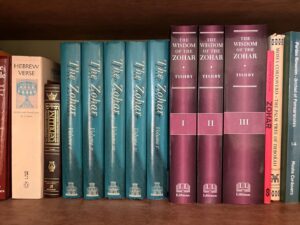
    Translation of The Zohar on my bookshelf

    Part of the problem is that there isn’t really one single Zohar. There is the very peculiar Aramaic text itself from the time it was written, the many layers of mystical speculation on its meaning, the commentaries surrounding it, the scholarly interpretations, and then the various attempts by translators to make something comprehensible out of a work that often seems determined to resist easy explanation. Every translation creates a different doorway into the same labyrinth.

    My first encounter with the Zohar was in the early 1990s, when I was studying Philosophy and Theology and writing my dissertation on The Continuing Significance of Kabbalah. I wanted to properly understand what Kabbalah was and why it remained important beyond Orthodox Jewish communities, particularly within the Western esoteric tradition.

    At that point, I knew little about the history of Kabbalah. I was approaching it with curiosity rather than expertise, reading anything I could get my hands on. The Zohar was evidently one of the central texts because so many later ideas about Kabbalah seemed to lead back to it. The problem was that, at the time, there was not all that much available in English.

    I had a copy of S. L. MacGregor Mathers’ The Kabbalah Unveiled, which contained translations of several important sections of the Zohar. It was helpful, but it was also several steps removed from the original, having been translated into English from a Latin version rather than directly from the Aramaic.

    I also had Gershom Scholem’s small anthology Zohar: The Book of Splendour, which offered selected passages and a glimpse into the wider world of the text. They were tantalising glimpses rather than a complete encounter. And perhaps that was appropriate. The Zohar is a text that seems to arrive in fragments. You don’t so much master it as gradually become more familiar with its landscape. I should mention that throughout all this, Gershom Scholem’s Major Trends in Jewish Mysticism was essential in helping me understand that the Zohar did not exist in isolation. It belonged to a historical world, with particular ideas, influences, and developments.

    For my dissertation, I spent time in the private library of the painter Robert Lenkiewicz. He had built up an extraordinary collection of books on philosophy, religion, psychology, and the occult, including rare manuscripts and esoteric works. The first time I visited, he actually locked me in the library while I was working so that he could be sure I wasn’t making off with any priceless manuscripts.

    While I worked, Lenkiewicz would sometimes come in and tell me stories. At the time, I didn’t always realise that these were not just anecdotes but attempts to communicate something about the subject itself. One story has stayed with me. He told me that, as a teenager, he had approached an old rabbi who was reputed to have great knowledge of Kabbalah. Lenkiewicz told me he had immediately launched into an impertinent question about the sephirah Din, or Gevurah. The rabbi responded by forcefully shouting, “No! No! No!” The young Lenkiewicz interpreted this as a refusal to engage with him because of his arrogance. Later, he came to realise the rabbi had deliberately demonstrated the very quality of Gevurah itself: boundaries, limitation, strength, and judgement. Whether the story happened exactly as told is beside the point. It captures something important about Kabbalah: that its ideas are not simply abstract concepts. They are ways of perceiving and engaging with reality.

    Lenkiewicz’s library was fantastic, but I also needed something substantial I could read at home. That came, via the magic of inter-library loan, through the five-volume translation by Harry Sperling and Maurice Simon. The Sperling and Simon edition was the first time I felt I was really entering the world of the Zohar. It was not the entire Zoharic corpus, but it was a substantial selection and, at the time, one of the most accessible ways into the work. The translation has a particular quality. It is, I think, quite beautiful and poetic, but it also smooths out some of the strangeness of the original. The Zohar can be, by turns, dense, awkward, repetitive, surprising, and downright bizarre. Sperling and Simon often transform that into something more flowing and literary. In some ways, this made the text easier to approach. In other ways, it concealed some of what makes the Zohar so fascinating. I would read passages and then sit with them for hours. A single page could send me down a rabbit hole of symbolism and speculation. I would try to work out what was happening, what the imagery meant, how the different divine attributes related to each other. It felt like trying to crack a nut with an impossibly hard shell.

    Eventually, I bought my own copy of the Sperling and Simon Zohar set from Bob Gilbert’s Wise Owl Bookshop in Bristol for around £50. That was a huge amount of money for me in the 90s, when I was living very frugally. Bob wanted me to know that this particular 5-volume copy had belonged to someone who “knew their stuff”, because it contained pencil annotations throughout. Sadly, I eventually sold it when I was spectacularly skint, although I have subsequently replaced it with another edition.

    Another crucial translation for me was Isaiah Tishby’s three-volume The Wisdom of the Zohar. Rather than being a complete translation, Tishby’s work is a thematic anthology of passages from the Zohar, accompanied by extensive explanatory notes. The danger with mystical texts is that it is very easy to treat them as collections of profound statements detached from their historical and cultural context, which is why commentary is helpful.

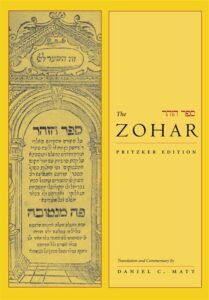
    Then came the Daniel Matt Pritzker Edition. I had heard excellent things about it from someone who was collecting each volume as they appeared, but the books were expensive, and I couldn’t justify buying them one by one. Only after the complete twelve-volume set was completed did I finally take the plunge. The later volumes were completed by other translators, with Daniel Matt as general editor, but the whole edition was an extraordinary achievement. I still couldn’t quite justify the cost of the hardback set, which ran to several hundred pounds, so I read them all as eBooks instead. Perhaps one day, when I am in my dotage, I will finally acquire the physical set.

    Cover of The Zohar Pritzker edition trans. Daniel Matt

    I spent around a year and a half reading through the entire translation carefully, making extensive notes as I went along. It was quite an undertaking. Some sections felt like crossing a desert. They were dense, repetitive, and stubbornly resistant to interpretation. Then, suddenly, there would be a moment of extraordinary brilliance: a shimmering jewel of thought, an unexpected connection, a flash of insight that made the whole journey worthwhile.

    Matt’s translation is astonishing because it allows the Zohar to be strange again. It captures something easy to lose: the Zohar is not a neat system of mystical doctrines. It is a living, imaginative, sometimes chaotic conversation. The sefirot of the Tree of Life are not a static diagram. They are supernal beings in relationship, constantly shifting and interacting. The divine world of the Zohar is dynamic, and the spheres dance with each other.

    Of course, coming back to an old text over several decades also means becoming aware of the troubling aspects. The Zohar contains some breathtakingly offensive passages. I became increasingly aware of its misogynistic elements and of how culturally distant the world of medieval Kabbalists is from my own. According to the Zohar, women are more evil than men because the Serpent filled Eve with its slime. It’s tempting either to dismiss old texts because they contain ideas we find unacceptable, or to romanticise them and pretend those problems are not there. Neither approach helps us understand them. The Zohar is a remarkable work of imagination and spiritual creativity, but it is also a product of a particular historical world, and both things can be true.

    The strange thing about having come back to the Zohar in different translations over the years is that I don’t feel I have finally understood it. If anything, I understand better why it refuses to be understood completely. I am enormously grateful to all the translators who have devoted years of scholarship to bringing this extraordinary body of work into English. Translating the Zohar is not simply a technical exercise. It requires patience, sensitivity, and a willingness to spend years wrestling with something that constantly slips away.

    And…having said this, the Zohar is not actually my favourite traditional Kabbalistic work by a long stretch, but more on that another time.

    This post by Duncan Fleming first appeared on Substack