Category: Duncan Fleming

  • Pan, Panic and the Power of Nature

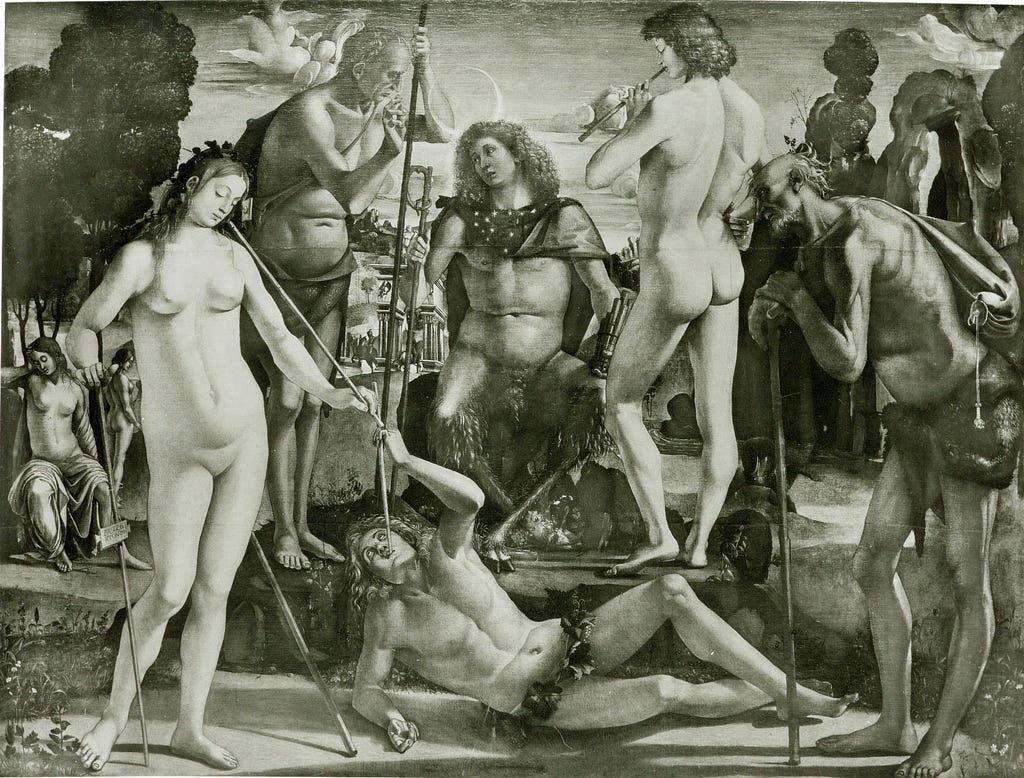
    We know Pan as the goat-footed nature god of wild fauna and pastoral freedom, but where does he come from? Who is he really?

    Pan was sometimes said to be the child of Penelope and Hermes. However, this is disputed, as he was also said to be one of the ancient gods from before Penelope’s time. As the child of Penelope, who was a mortal and the wife of Odysseus, he would have inherited her intelligence, cunning and independence. As a child of Hermes, he was a messenger and an ambassador between the world of mortals and the gods.

    I am interested in the idealised interpretations of Pan that emerged through Romantic revision in the eighteenth and nineteenth centuries, then through the occult revival and into neo-paganism in modern times. One interesting current that has fed into these ideas about Pan comes from the writings of Francis Bacon.

    As a proto-scientist, Bacon took a rational approach to understanding mythology. He thought the myth of Pan was about the natural order of things, and that Pan represents nature in its free state. He thought Pan represents and lays bare all things, the entirety of nature.

    There is a peculiar method of mystical meditation on the hidden meaning of the appearance and countenance of divine beings, in which every feature has a deep significance. It can be a form of devotion and a kind of memory theatre. There are meditations on the wounds of Christ. In Kabbalah, there are deeply mysterious sections of the Zohar that describe the significance of each body part of the divine being. Francis Bacon does this with the countenance of Pan (and other gods too, but really goes to town on Pan), investigating in great detail and drawing out the meaning as one would read the book of nature.

    Pan is depicted as having the upper body of a human with horns, and the lower body of a goat. So he is both rational and civilised, and also wild, bestial and instinctual. His body is rough and hairy, his beard long and shaggy, He is bi-formed, above like a man, below like a beast, his feet like goats’ hooves.

    Goats are climbing creatures, and they can raise themselves to great heights. The horns show that the wildness is not confined to his nether regions, but bursting right out of his head: intrinsic and inescapable.

    Bacon also notes, somewhat esoterically, that because horns are broad at the base and sharp at the tip, they are like the pyramid and demonstrate the specificity of individual and singular creatures having emerged from the totality of nature. He also notes that Pan’s horns reach right up to heaven, showing that the heights of nature truly pertain to things divine.

    Even the hairs on his body and the bristles of his beard are beams and faculties: the tendrils are the stretching forth of creatures, and the singular strivings of animals interpenetrating with celestial rays.

    In his right hand he holds a shepherd’s staff, partly upright, partly crooked. He was the god of shepherds and all rural inhabitants, lord of hills and mountains. Bacon sees the crooked staff as an emblem of the ways of nature, which are partly straight and partly crooked, and of the indirect ways in which divine providence operates.

    Pan is said to have crafted his own seven-reeded flute. Held in his left hand, this flute is like the Pythagorean lyre: it plays the music of proportion, mathematics and musical order. For Bacon, the seven reeds also echo the seven planets, whose movements produce a great harmony of concord and discord throughout the natural world.

    He wears a mantle of leopard skin. There is something of the conqueror in this, and the skin is a prize, as he was a god of hunters. The spots of the leopard skin are like the countless stars in the night sky, the sea with rocks and islands, and the land dotted with flowers.

    Pan was said to be the leader and commander of the nymphs who dance around him. The nymphs are the souls of living things, revelling in their true nature.

    Pan goes in search of the nymph Echo. He is chasing a reflection, an echo of the inner workings of the natural world. For Francis Bacon, this was like the scientific method: trying to understand the great patterns at play by observing their expression in the microcosm.

    Pan has the power to invoke terror and fear in mortals, which is where we get the word panic from. He is powerful, unpredictable and frightening.

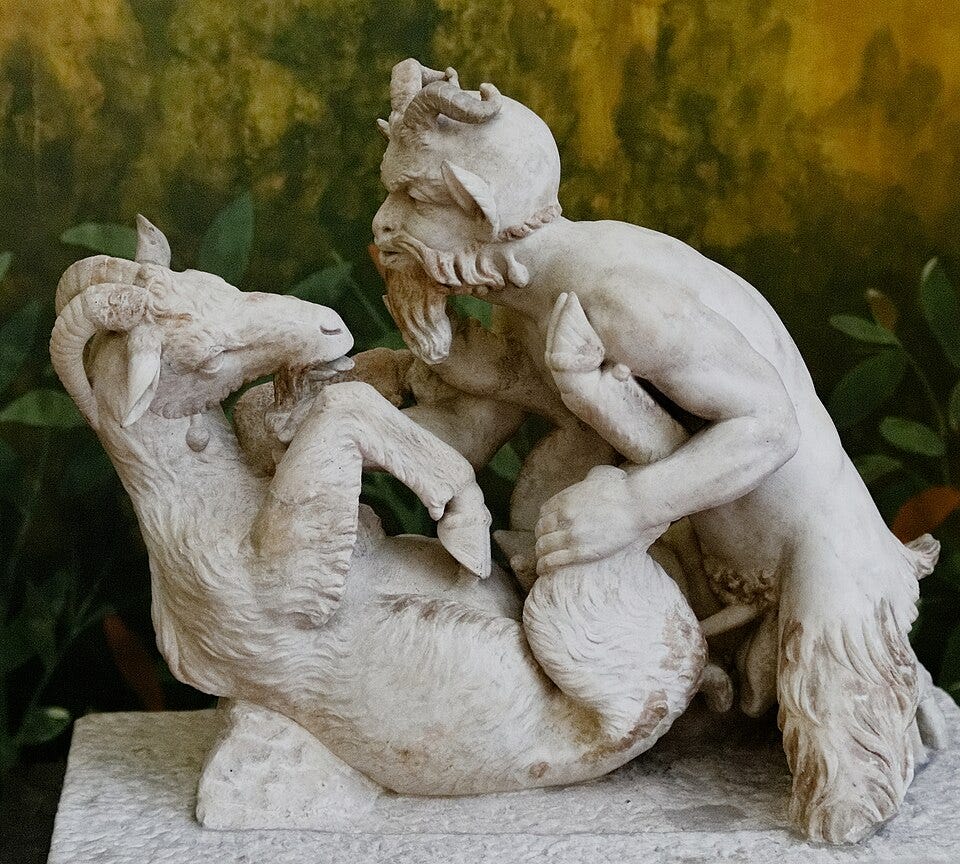
    One aspect of Pan that Bacon did not particularly emphasise or draw out was his association with sexuality and sexual desire. Perhaps this was deliberate. In ancient times, Pan was often depicted with his cock out, sometimes fucking goats or nymphs. He was fertile and unashamed.
    And yet Bacon was also very evocative and florid. He was far from reductionist. His depictions of Pan are extremely expressive. There can be something sad and reductive about an overly rational explanation of mythology. It can be like making a ship in a bottle instead of sailing a real ship over stormy seas.

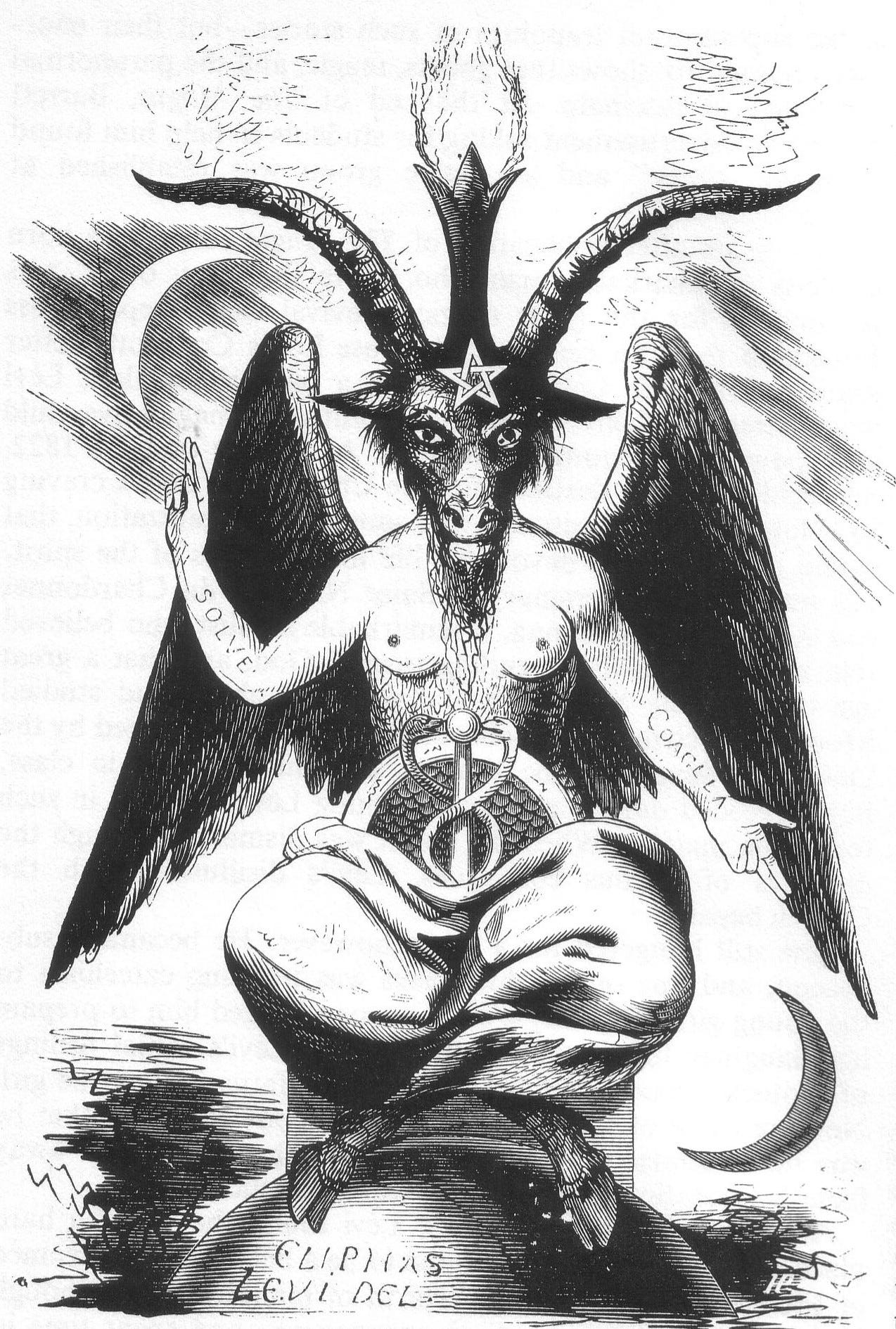
    There is also, in modern times, much confusion about Pan and the ‘Devil’. This is partly due to the figure of Baphomet. The image most people recognise comes from the nineteenth-century occultist Éliphas Lévi. Baphomet has a mix of human and animal traits, but is more of a figure representing opposing forces brought into balance.
    The Devil, far from being fully plugged into nature, is the ultimate empty shell, the epitome of boring illusion upon illusion. He is the saddest of sad sideshows. The Devil takes us further away from life and from trust in our own animal nature. He is like a horrible old man you met at the river’s edge who convinced you that if you carried him on your shoulders, he would guide you safely across, but then convinced you to carry him around on your back forever.

    So, if Pan is not the Devil, then who is he? Is meeting Pan just uniting with our own animal nature, or something more awesome and unsettling? An encounter with the Piper at the Gates of Dawn?

    With such complex, multi-ordinal layers of meaning, is it wise to invoke Pan directly? Are we to invite panic and pandemonium? Why would that ever be needed? Perhaps as an antidote to complete ossification, when we need dynamite to blast away the rigidity. Do you require a kicking from the biggest goat of all?

    In its most dysfunctional aspect, there can be something terrifying about the raw power of nature. The Tradition speaks of angels with fiery swords guarding us from the elements, and the Guardians of the Four Watchtowers who keep the Gates firmly closed. Outside the walls of the Palace, there are dire warnings of chaos, cacophony and pandemonium. Do we risk letting everything in at once? Allowing the full power of nature in with no attenuation? Beyond the hyperbole, I hope to say more about that another time.
    Thanks for reading! Subscribe for free to receive new posts and support my work.

  • Magic Without Morals

    There’s an obvious appeal to magical practices that aim to remove psychological blocks and unlock hidden power by liberating the individual from herd mentality, especially for those who might have been brought up in a repressive religious environment.

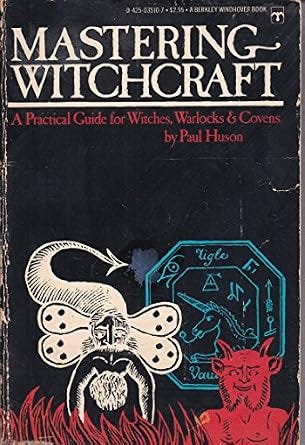
    One example of many, which I read some time ago, is Paul Huson’s Mastering Witchcraft. This book is still revered by some for its approach, which places considerable emphasis on liberating magicians from conventional morality. For Huson, the essence of Witchcraft is transgression. It’s a valuable book, but I also found it quite cavalier in places. Some of its techniques involve deliberately setting aside moral restraints and inhibitions, with little consideration of the implications. There is an implicit suggestion that such restraints are obstacles to personal freedom and the exercise of magical power.

    I agree that there’s a strong case for promoting freedom of thought and independence, and for liberating one’s innate vitality, which may be tied up in many knots of repression. But I did wonder whether advocates of this approach regard all morality as merely a superficial veneer, something to be discarded in the interests of personal freedom?

    This might be partly due to one’s upbringing. For someone not raised in a religious or spiritual home, and without any inherited framework for understanding life beyond the material and human world, there can be a lack of belief in anything bigger, anything genuinely transcendent. In that case, someone with a naturally spiritual inclination needs to create or adapt a broader, multi-dimensional paradigm that works for them, whatever that may be. They might not have any particular moral pricks to kick against. They might not have any strong instinct to rebel against religious morality and just want to be an authentic version of themselves and live a decent life.

    Some of these ideas of freedom through liberation from moral thinking seem to be a simplified version of Nietzsche’s criticism of what he called slave morality. He thought that some moral systems emerge from the deep-seated resentment of those who lack power. He regarded these slave moralities as an aberration and a corruption of a more authentic master morality, rooted in willpower, strength, excellence, independence, and success in life. He thought that because some groups can’t exercise power, they invert the moral hierarchy, making the powerful evil and the weak virtuous. Independence is reframed as selfishness. Strength is reframed as oppression, etc. Obedience (whether to a human authority or by worshipping a sky-Daddy) is not weakness but righteousness. He saw slave morality as essentially anti-life and doomed to failure. If you condemn ambition, you just remain a loser. And if you keep spurning strength, you’ll become weaker and weaker. Although his message was more complex than simply saying Christianity is bad, he did associate a lot of slave morality thinking with the development of the Church.

    But Nietzsche’s ideas about slave morality are not really a recommendation to completely abandon morality and do whatever you want. He was interested in the transformation of values. His concern was that our values, the things we give emotional energy to, could become distorted by resentment, leading to ever-greater powerlessness and further resentment. That doesn’t mean the only viable alternative is unbridled indulgence or pursuing power for its own sake.

    To genuinely inspire, spiritual traditions rely on a raw, mystical connection and direct experience. However, this rawness can also be deeply disruptive, creating tension. Because we’re human, we rely on symbols to understand, record, and communicate our transcendental encounters. The symbols we use are typically drawn from our own culture and traditions, shaping how we see and interpret the Divine. Collectively, these create a religious tradition. But over time, our spiritual traditions can become culturally conservative, overly reverent, and ossified like stone, stuck in a specific time and place that has long ceased to be relevant to our daily experience in the here and now. Why should I base my decisions on the ethical codes of an agricultural civilisation from thousands of years ago? People expressing raw inspiration walk a fine line if they are to remain part of their spiritual tradition and not be rejected. Yet this interplay between inspiration and convention is essential. It is what shapes and sustains spiritual traditions.

    As we know, in the Western Esoteric Tradition there is a key concept of humans being a microcosm of the universe. And that the universe has emanated (or emerged) from certain bedrock principles such as unity, balance, and the tension and reconciliation of opposites. So there is, baked into the very fabric of our being, a deeper ‘morality’ of embodying and aligning with these universal principles. Of course, one of these universal principles is something along the lines of agency and self-determination, but that is only one small aspect of our being and needs to be balanced with our need for communion and participation etc.

    So if we’re going to throw off the shackles of our conditioning, it’s useful to distinguish between the superego’s “don’t do that!” to us, driven by repression and a superficial veneer of respectability, and a genuine 360° morality: being aligned with the principles of our own and universal nature. This means accepting that the building blocks of reality are manifold and include both loving-kindness and strength.

    There is also something in this mix about tapping into sources of ancient power, reaching beneath and beyond the constraints and necessities of settled civilisation, down to raw energy. This can be quite a juvenile fantasy, as in simply inverting Christianity, seen in the most primitive forms of Satanism. But I do get the appeal at a rock’n’roll, energetic level.

    One form of evil in the Tradition is said to stem from atavism, in which outdated or regressive patterns re-emerge, often imbued with raw, primal force yet misaligned with the current stage of progress. It represents a form of backward movement: an attempt to reverse the course of evolution by reviving past customs, symbols, or ideals that once had value but are now harmful and out of context. An obvious example is the ideology of the Third Reich. Beyond its superficial modernism, the Nazi regime sought to resurrect a mythic, idealised past, a supposed golden age of racial and cultural purity, through authoritarianism and brute force. This attempt to impose an archaic vision on the modern world illustrates how atavistic currents can become malignant when severed from ethical evolution and imposed by violence.

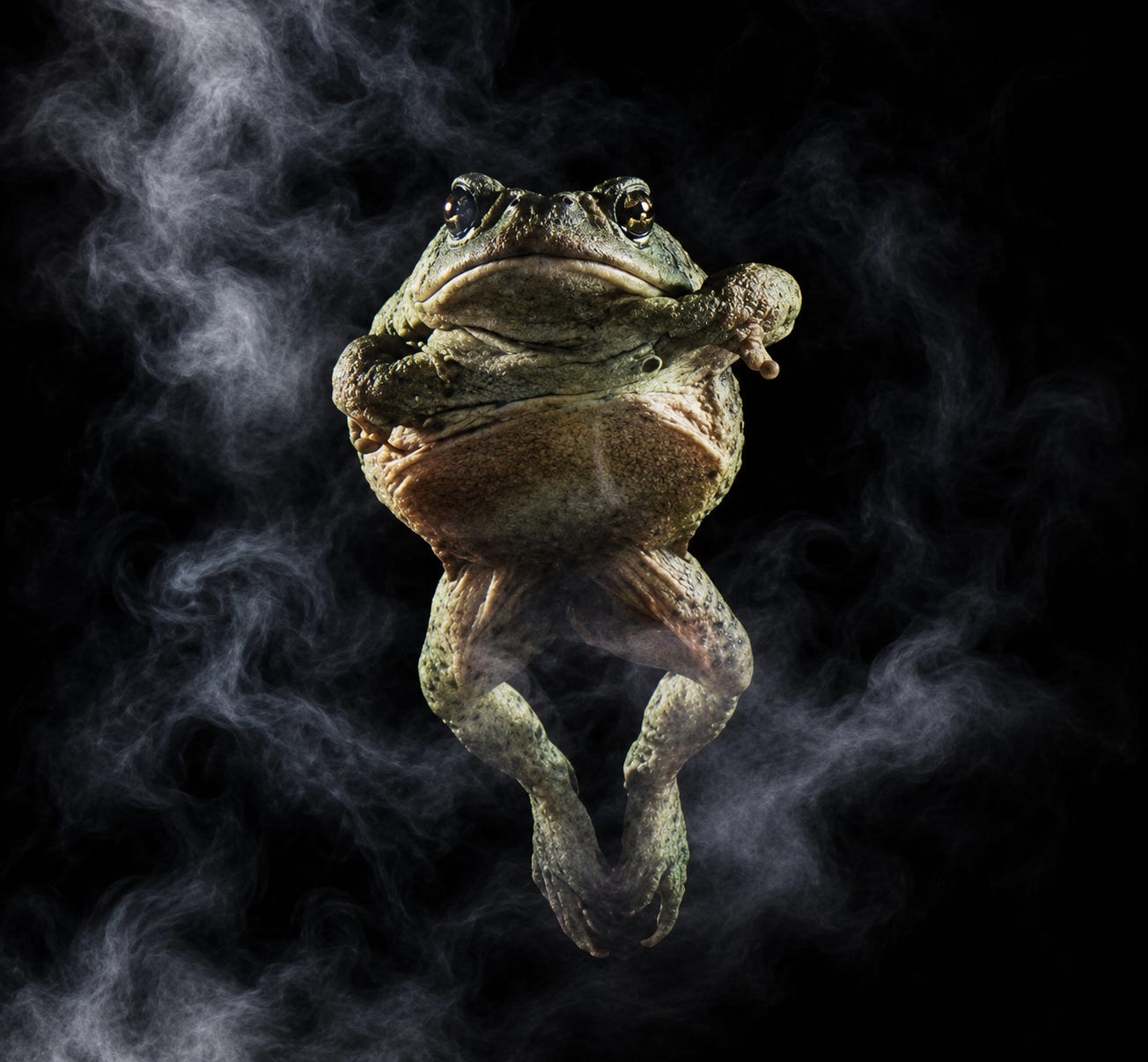
    But this is an extreme example. What would most people do without moral constraints? Sometimes people’s ambitions and preoccupations can be curiously parochial, hopelessly bourgeois. They would become Toad of Toad Hall. There is something odd about the assumption that being free also means being free from discomfort, constraints, and obligations. It can lead to a sense of privilege and entitlement.

    There is, embedded in our culture, a belief in an automatic right to comfort. Anything that disturbs or challenges that comfort is seen as an infringement of personal freedom. Without leaning too heavily into the territory Nietzsche would consider slave morality, this belief has strong links to the history of white supremacy. The comfort and freedom of the privileged have come at the expense of others, who bear discomfort and a lack of freedom.

    It’s worth examining the assumption that the world should accommodate our desires and preferences and remove whatever gets in our way. That is not real liberation.

    There is much more to say about the pursuit of one’s personal will in conflict with the will of others, and about how this relates to ‘True Will’, but not right now.

    Thanks for reading! Subscribe for free to receive new posts and support my work.

  • Adventures in Tarot

    In the late 1980s, when I was, I think, fifteen, I was round at a friend’s house and noticed a dusty old tarot deck on a bookshelf belonging to their mum. I asked her if it would be okay if I took a look, and she said I could have the cards, as she hadn’t looked at them in years.

    Although I had seen images of tarot cards in books before, I’d never had the chance to see all the cards in detail or to feel the physical sensation of holding them in my hands and moving them around, which is an essential part of their value.

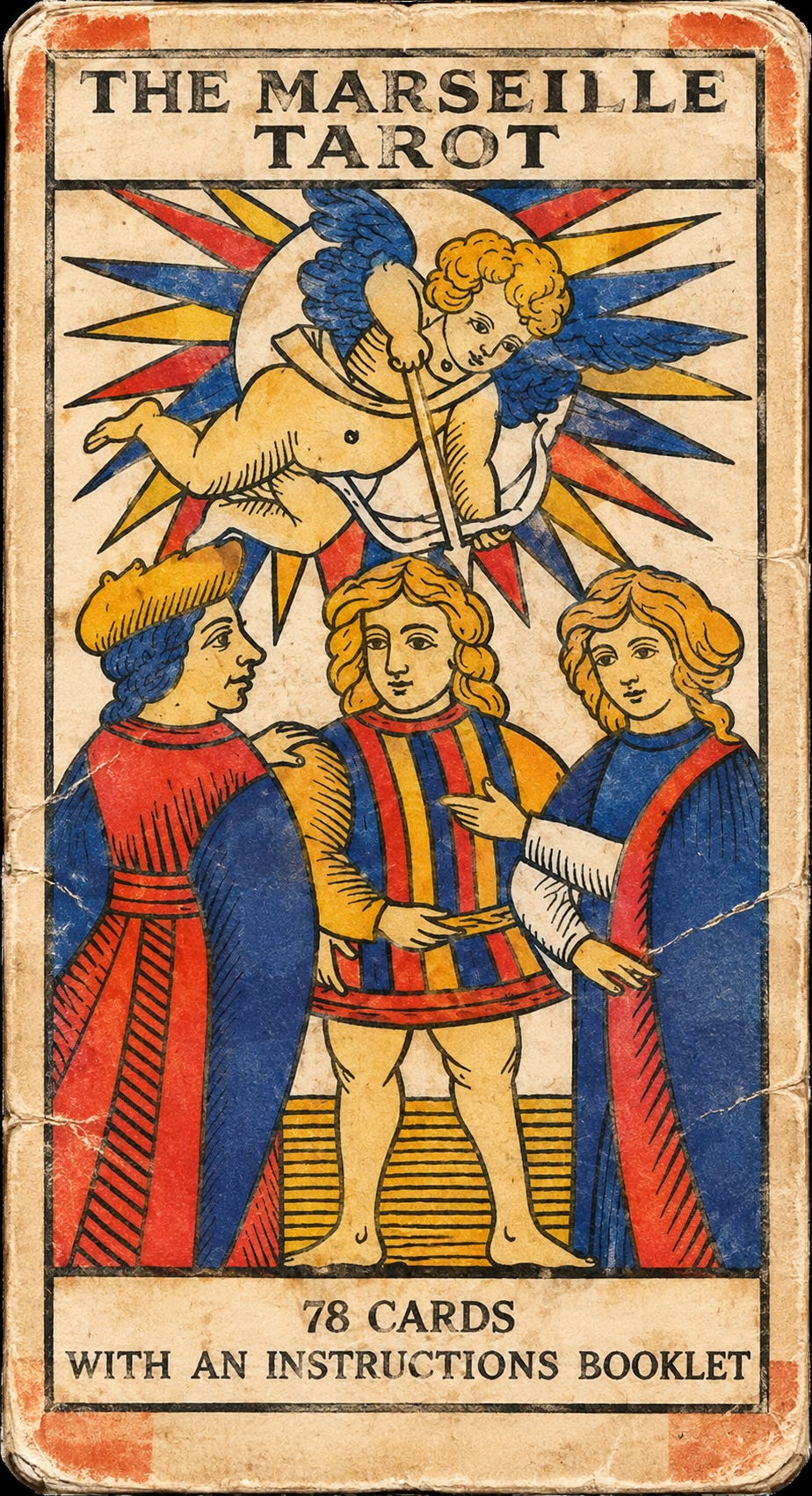
    It was a traditional Marseille deck, printed, I suspect, in the 1960s or 70s. Nothing rare or special, but it opened a doorway for me. There was a little booklet in the packet that explained how to do a Celtic Cross reading and provided rudimentary divinatory meanings for the cards, which I read dutifully. This was before I had any understanding of Kabbalah or occult teachings, other than the kind of books on the supernatural, etc., that it was possible to borrow from my local lending library.

    I practised on my friends and acquaintances and, fairly soon, started to get the knack of taking a question from someone and interpreting the spread of cards into a coherent reading.

    Even from that early teenage experience, I can recall how important it was to free my imagination and weave a narrative, a story that moved from where the questioner had been, to where they were now, to where they were likely to end up if the sum of current influences continued as they were, without any changes.

    This kind of narrative weaving tends to become easier with practice. It can be applied to any elements, as in the game where someone is asked to make up a story featuring three seemingly random elements.

    I kept up this interest throughout my later teenage years, and it proved valuable when, at the age of nineteen, I found myself in a tricky situation.

    My girlfriend was spending six months in Portugal as part of her university course. I had no money to go out and visit her and needed to earn some in a hurry. By serendipity, I found myself in the Corn Exchange in central Manchester, doing tarot card readings six days a week for a while.

    Although I had some practice in giving readings, it felt like a leap to do this professionally and, audaciously, to ask people to pay me for their readings.

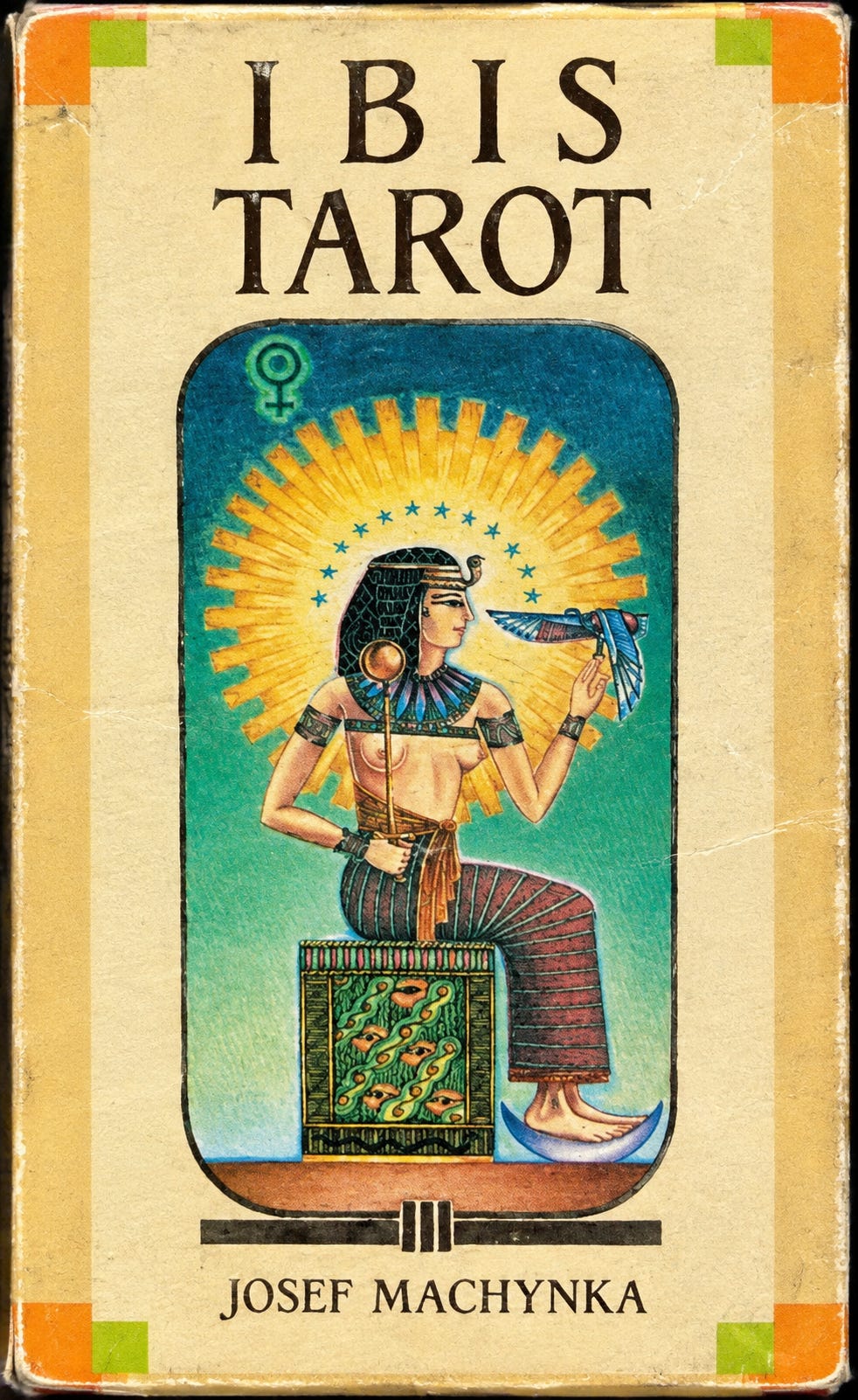
    The set of tarot cards I was using at the time was a slightly idiosyncratic, ancient Egyptian-themed deck called Ibis Tarot by Josef Machynka. As I recall, it replaced the Devil card with a crocodile, possibly the crocodile-headed Sobek, a fertility deity also associated with fierce military activity, although I didn’t know that at the time.

    I’m sure there was some variety among my clients, but my abiding memory is of women in their thirties and forties, in unpleasant states of envy or jealousy about potential, current or ex-partners. They wanted to know, “Is he going to stay?” “Is he going to come back?” and that kind of thing.

    It was at that time that I learned an important lesson about ‘cold reading’, a particular kind of confidence trick: listening very carefully to people’s responses to vague details and honing in on their emotional reactions to give them more of what resonates with them. This is an easy trap to fall into, but it gets in the way of doing a reading properly.

    There is something uncanny, surprising and topsy-turvy about a genuinely plugged-in tarot reading that subverts the obvious, gets beneath the superficial conscious surface and reveals features and patterns that were previously hidden. When this happens, you know it’s happening. There’s no faking it.

    Yes, there is some collective wisdom about what each card means, subtly altered by its position in a reading, and a cumulative extra meaning from the collective placement of the cards. But all this unlocks a door through which new and surprising elements just come through. And when they do, the reader has to go with it, with the intuition.

    For this reason, in my experience, it is actually quite a lot easier to do a tarot reading for someone you don’t know very well, or even for a total stranger.

    It was about five years later that I undertook much more substantial work on understanding and meditating on the tarot and its symbolism in a structured (and quite idiosyncratic) way. This was private work, and it helped me get to know the characters and landscapes of the cards as archetypes.

    By then I was predominantly using the Rider-Waite deck, designed by Pamela Colman Smith, for both meditation and divination (and still do). Although this is the most popular and influential of all modern decks, I don’t think it is in any way superficial. In fact, I think it has hidden depths and, for me at least, always has something new to reveal: some feature or pattern in the cards that I will notice for the first time when I look closer.

    I have to say, though, that the divinatory meanings given in the accompanying book by A. E. Waite, A Pictorial Key to the Tarot, always struck me as a little stark and sterile. They seemed too literal and prescriptive. Not multi-ordinal enough. It was around this time that I stopped using the reversed meaning of a card, i.e. the negative or dysfunctional aspect indicated if the card was placed upside down. I began to find this too limiting, and felt that it was more helpful to see each card as a ‘double-edged sword’, with both functional and dysfunctional aspects, depending on the context and the other cards.

    I also changed my attitude to a more fatalistic sense of ‘fortune telling’, in that, in the spirit of Sartre’s philosophy that freedom is what you do with what’s been done to you, the situation indicated by a spread is never crushingly inevitable, but more an indication of the tendencies at play if nothing changes, including the current approach and outlook of the querent.

    I still use tarot a lot for myself, but I don’t do as many tarot readings for other people these days because I am quite busy with other commitments. Although when I do, it is always worthwhile.

    I will save a more general discussion of divination, including how it might work and different methods, for another time. The whole subject of divination, in the context of divine magic, deserves more consideration, and I hope to write more about this.

    Thanks for reading! Subscribe for free to receive new posts and support my work.

  • The Confusion of Tongues

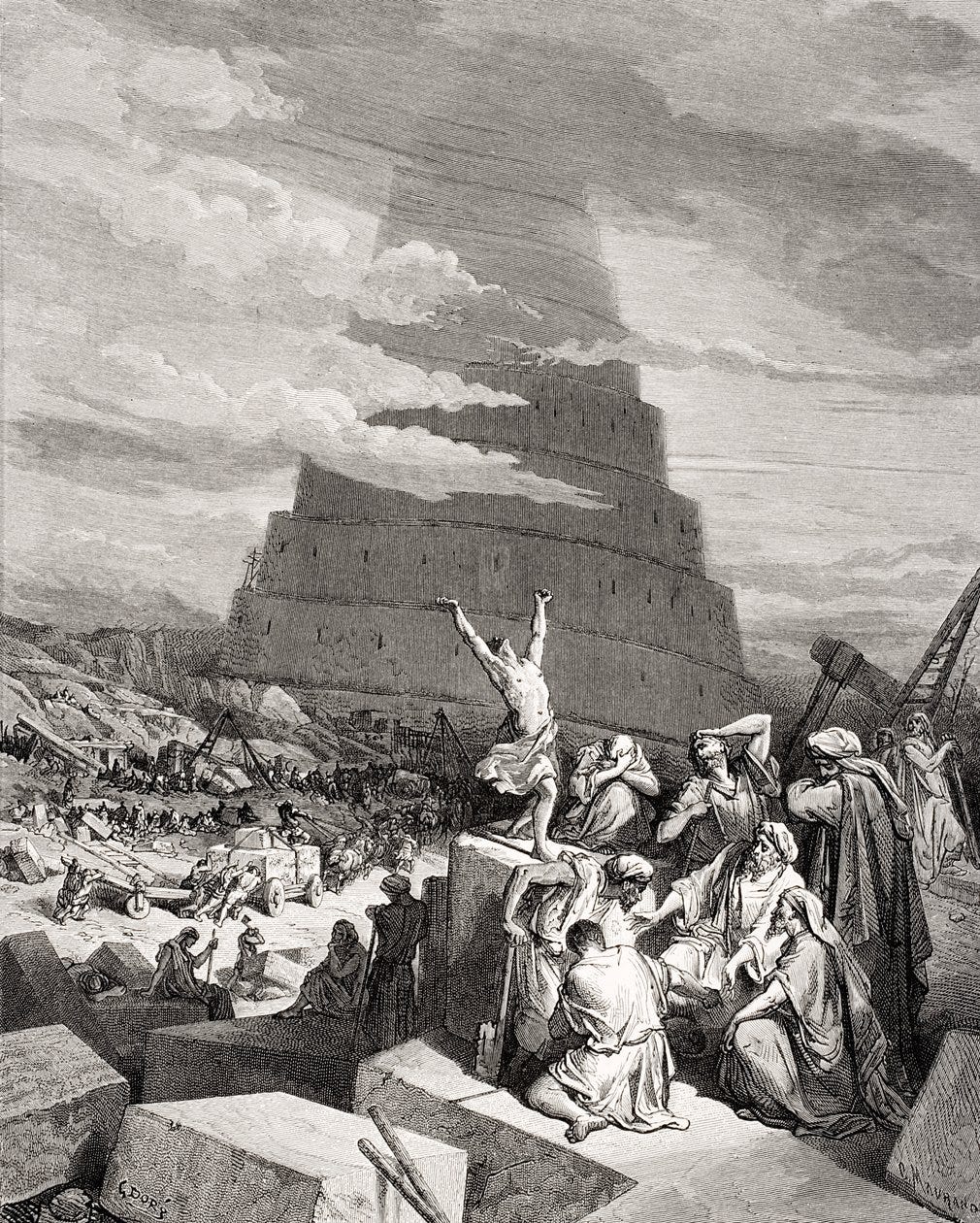
    The Confusion of Tongues by Gustave Doré

    The Confusion of Tongues by Gustave Doré

    Towards the end of The Selfish Gene by Richard Dawkins, almost as an aside, he suggested the idea of purely algorithmic entities that operated just like genes, but instead of using biological material to replicate their pattern, they used communication. He called these ‘memes’ rather than ‘genes’, from a root indicating memory and mimicry. It is strange that the arch-scrooge of militant atheism and anti-spirituality should have come up with one of the spookiest and most magical ideas of the twentieth century.

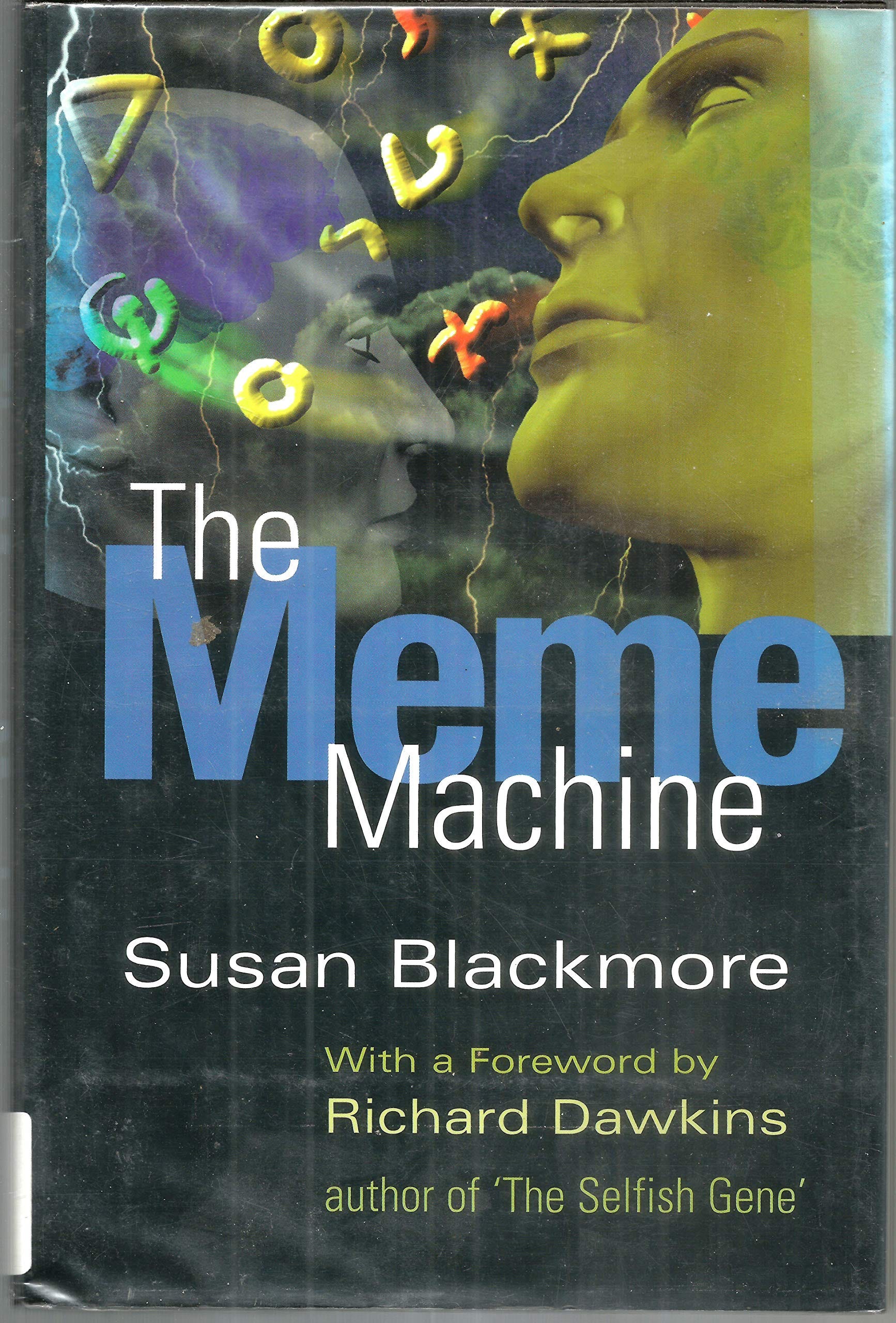
    This idea was notably developed by Susan Blackmore in The Meme Machine in 1999, where she expanded on the idea that memes are patterns of information that reproduce themselves through human communication and live in our brains as patterns. To replicate themselves, they must have something about them that urges the host to transmit their pattern. They are in competition with each other to colonise the real estate of the human nervous system. These memes, these imitative patterns, might spread because they are conducive to human success as a species, but this is not their imperative. They don’t have to be true or beneficial, but just good at getting copied.

    Blackmore went on to argue that memes have shaped the evolution of the human brain, language and society. She even posited that philosophies, religions and ideologies could be understood as collections of mutually reinforcing memes that helped one another survive and spread, rather than possessing any intrinsic truth. In this way, we have been completely colonised by memes. Perhaps the most pervasive and illusory meme of all is the idea of the ‘self’. These memes don’t serve humans – we serve them. At best, there is an uneasy symbiosis.

    It’s interesting that Blackmore wrote this at the time when the internet was really starting to take off. Of course, now the word meme has a much more mundane meaning – as in an often inane but strangely compelling clip, gif, tune, video, etc. that somehow becomes suddenly massively popular. Perhaps an inherent sense of the original meaning of memes is that we refer to these as something becoming ‘viral’.

    It would seem now that our compulsive urge to constantly communicate with each other as humans, even when we don’t really have anything to say, is the psychic equivalent of coughs and sneezes, which spread diseases. We are addicted to communicating. And so much of our research and development into new technology has been diverted into mass communication systems that are not always for our benefit, which would seem to support the notion that we have been pathologically colonised by memes.

    There are antecedents to this idea. In some of the more technical ideas about karma, there is the notion that our mental life creates thought forms. These are essentially non-physical algorithms. In this model, there are also elemental forms of life on subtle planes that occupy these thought forms and give them an extended life, like a hermit crab occupying an old shell. And then these take on a life of their own, living in and around the vicinity of their progenitor and indeed being constantly revivified by the mental and emotional impulses of humans. This is a similar idea – that they exist as patterns that are not just reproduced physically, but that exist essentially in the noosphere. And like an algorithm, a pattern can be made manifest in many ways – for example, a melody could exist as the spikes on a musical box, or as a tune that is whistled, or played on an accordion, or another instrument, or, crucially, just imagined in the head of a human and remembered, then reproduced many years later. The real melody is just a pattern, and it has some kind of independent existence even when it is not being ‘played’.

    So where does our urge to communicate come from? General Semantics is the study of how language, symbols and our assumptions shape the way we understand and respond to reality. It was founded by Count Alfred Korzybski in the early 20th Century as a response to the deadly lack of collective human sanity that led to the Great War. Korzybski used the term ‘time binding’ to describe our ability to pass knowledge from one generation to the next using language, allowing each generation to build on what came before. Our radical development is because we can learn and pass that learning on to others, so that collective knowledge and skills accumulate over time. Each generation starts where the last left off rather than having to learn everything from scratch. But this process doesn’t just pass on what is correct and useful. We inherit mistakes and false beliefs too.

    Now more than ever, with the proliferation of mass communication, it is vital that we don’t promote falsehoods. Our nervous systems are the real estate, and we are bombarded and colonised by other people’s thoughts. There is a well-funded propaganda engine of deliberate misinformation and disinformation that aims to stoke division and civil unrest. This is very evident in the United Kingdom. It involves both viral video clips of real incidents taken out of context, so the connotation of danger is exaggerated, and also completely fake AI-generated videos. The intention and effect are the same. It is meant to amplify fears of the ‘other’. Currently, this is focused mainly on Muslims and migrants, but it is also focused on Disabled people who claim benefits, and trans people, etc. Such bilge is most evident on X/Twitter but is proliferating on most social media platforms to some degree.

    There is strong evidence that hate-fuelled misinformation and disinformation spreads faster online because social media algorithms prioritise engagement over accuracy, so posts that provoke outrage simply get more clicks. In this view, it is just an unfortunate side effect of site optimisation that content which deepens polarisation is prioritised, but not addressing this only exacerbates deliberate campaigns of misinformation and disinformation.

    But rather than just wringing our hands about this, or wasting our time arguing with bigots online, is there anything that can actually be done? In the UK, a key question is whether Parliament is developing measures that go beyond the Online Safety Act 2023 to address deliberately fabricated videos that incite hatred, falsely depict people committing hateful acts, or are used to inflame hostility towards a particular group.

    A Representation of the People Bill is currently doing the rounds, and proposals have been made to address AI-generated deepfakes featuring election candidates, but these don’t aim at a wider ban on political deepfakes. The Crime and Policing Act 2026 brought in bans on non-consensual intimate images, including fake AI-generated content, but again this is limited in scope. The Government has also been looking at ways to make AI-generated content easier to identify. But none of it really adds up to a proper clampdown on the torrent of deepfake misinformation and disinformation we’re seeing. If there were something more tangible in the pipeline, I’d certainly be wanting to do something to ‘tilt the odds’.

    In a recent conversation with a friend who shares a mutual interest in esoteric matters, I wondered whether the best, and possibly only, antidote is for people en masse to get better at recognising and seeing through this kind of propaganda. But they rightly reminded me that people don’t generally change their minds about their convictions; they just welcome evidence that reinforces what they already think.

    So, what is the solution? A grand, Battle of Britain-style collective of magicians across the land coming together to do battle on the subtle planes? Secret underground subterfuge? Glamour aside – contact me if you are interested!

    Thanks for reading! Subscribe for free to receive new posts and support my work.

  • An Occult Family Tree

    In spiritual traditions, there’s often an element of reverence for one’s ancestors. Sometimes this is a big deal, and sometimes it is understated, perhaps one dedicated day or night of the year when we remember our family tree. In many faiths, there are times of the year when events that had a huge impact on ancestors are remembered. One of the Ten Commandments is to honour thy father and thy mother. In pagan traditions there are autumn rites associated with ancestors, and family.

    My immediate ancestors were a variegated bunch and I don’t feel inclined to revere them. There was more than a fair share of addiction and mental illness on both sides of my family, and this led to much confused and confusing behaviour. It complicates the idea of ancestor reverence and I’ve generally felt more inclined to keep my distance.

    Another reason I don’t feel much connection with my family going back is that I tend to imagine vague disapproval coming back at me from beyond the grave. They weren’t unusually judgemental, but growing up in the 70s and 80s around Manchester, everything was everyone’s business. I couldn’t even have a crafty cigarette as a youngster without a neighbour noticing and it getting back to my mum or my gran. For various reasons I often had a strong sense of being out of place. Like a germ encountering an immune system that recognised it as something to be expelled.

    And so I’ve never felt massively connected to my immediate ancestors in the obvious sense. Yet one idea that does resonate with me is the knowledge that every set of parents had a set of parents, taking us back to the origins of our prehuman ancestors and even back to primordial slime. So I do feel a sense of connectedness to simply being a creature of Earth, part of a chain of life continually present and adapting to changing circumstances. But that connection only goes as far as the body soul, for me. My headspace doesn’t feel all that human. I still feel like a visitor, an outsider, and always have.

    Not much is known about the history of my dad’s side of the family. I think some of them were from the Isle of Bute. He died in 1987. My mum, in recent years, has done work on uncovering her side of the family tree. The majority of my relatives weren’t particularly notable, and indeed on one side there is a gap going back with no records, as they were illiterate Irish farm labourers. There is the occasional lurid story from local newspapers, as I expect there is with every family history. There is even a genuine mad hatter ancestor who ended up in the workhouse with mental illness as a result of mercury poisoning from working in the hat industry, where mercury was used to treat felt.

    Another ancestor was Charles Winston, the son of Charles Winston (1744–1802), Attorney General of Dominica, and an enslaved woman on his plantation named Kitty. Unusually for the son of an enslaved woman, he was sent to Scotland with a bursary to be educated, but ended up destitute. Charles Winston Sr held over 150 enslaved people on the Bath and Rose Hill estates in Dominica. My DNA has a small amount of Senegambian and Guinean ancestry, which may connect me to Kitty’s West African ancestry, although there is no way of knowing for certain. Nothing more is known about her.

    And so these are just scrips and scraps of stories, nothing more. They are easy to project onto, but doing so is, in many ways, nonsense. I have some affection for my parents’ and grandparents’ generations, and respect for their resilience and practical skills. Between them, they knew how to do stuff, how stuff worked, in a way that seems more lacking now. But there is no sense of lineage to anything I could project aspirations of reverence onto. My parents were atheists. There is certainly no link to a rustic or idyllic past in any meaningful way.

    Where I do feel something more like a connection with the past is in the esoteric tradition I was trained in. I’m interested in where it came from, although I’m not too caught up in tracing exact lines of teaching. From what I can gather about the teachers of my own teachers, there was a notable cluster of progressive Kabbalah and magical work in and around Soho, London, in the late 1950s and early 1960s, before they dispersed to various locations, including Glastonbury. This is well documented on the Soho Tree of Life and Historical Sketches in Esoteric Britain websites by Cherry Gilchrist and Rod Thorn.

    Before these websites, the only insight I had into this scene and other direct antecedents was purely anecdotal. But it definitely gave me a sense of what a hot mess these Kabbalists and ritual magicians were. The revered sages and authors of well respected books on the occult had been living like ratbags, hanging around penniless in all night cafés. Some devoted their lives to the work.

    This connection feels less like a family tree and more like a mycelial network of fungi growing underground. That is how I see the Western Esoteric Tradition. Much of it is subterranean and hidden, but the network connects across centuries and across the planet. The groups that grow and flourish to the point where other people hear about them are like mushrooms fruiting above the ground and spreading more spores. And there is so much more in tiny groups and teacher to student activities that is entirely unknown. We’re different and we’re the same. At this autumnal time of year, it does feel like the veil is thinner and it’s easier to sense that happening. To be honest, that’s the kind of connection I really care about.

    Thanks for reading! Subscribe for free to receive new posts and support my work.

  • He Slash Her

    A few years ago, society seemed to be changing rapidly. Various kinds of personal differences seemed to be losing their stigma. It was becoming more socially acceptable to be neurodivergent, trans, or to have other kinds of difference. It felt like people could finally be a little bit more comfortable in their own skin. Primary-school-age children were discovering the edges of their identity, putting the jigsaw of who they were together in a freer way than before. Yes, there was an aspect of privilege in terms of formal diagnosis, because the waiting lists were so long that it was often only people with spare money who could get the ball rolling. But to me, it all seemed like a step in the right direction.

    On some level, I was aware this may have been a bubble. I’ve lived in Bristol for many years, which is certainly perceived by the right-wing press as a hotbed of wokery. My paid work also exposes me to polar extremes of opinion. On the one hand, there are people pushing for greater inclusivity; on the other, I’m very aware of the sheer amount of hate-fuelled vitriol. Because it can be hard to judge what ‘normal’ people think, I looked to YouGov polls and similar sources to create a simulacrum of a semi-objective barometer of ordinary, changing opinion.

    The backlash against this increased inclusivity has been harsh. When large numbers of people, especially younger people, began sharing and revelling in their differences, it made more socially conservative people feel as though the fabric of civilisation was falling apart. They couldn’t tell the boys from the girls anymore. They were being told off for using the wrong words. They were being told that people were autistic or ADHD, etc., in ways that seemed hard for them to understand, because, back in their day, people who were maybe a little odd didn’t have a label. And so, a large swathe of society set about actively re-stigmatising difference again, to keep people in their lane, back in their box. Kindness was reframed as weakness. There was more ‘enemy at the gates’ rhetoric. ‘They’ were taking over. There were also superficially empathetic versions of this narrative: the poor, mixed-up kids who were being taken over, hoodwinked by social contagion. Swarms of migrants were invading, taking advantage of our good nature. At the heart of this was phobia. An exaggerated fear, out of all proportion to any real danger posed by any marginalised group.

    There is no perfect looking glass. Viewing the world through any single lens will inevitably introduce some distortion. The Marxist view is one such lens. I’m not talking about the dialectical model of change associated with Marxism via the philosopher Hegel, but about the basic notion of opposition in class struggle.

    I was brought up with this view. My dad and his brothers came from the tenement blocks of Glasgow’s Gorbals district. They had experienced a lot of poverty. Their heroes were trade union activists. As a child, I spent Saturdays collecting food donations for striking miners. There was a war between the rich and the poor. It is incredibly incisive and energising to see life as a Manichaean struggle between two opposing forces of good and evil: the powerful exploiting and oppressing the weak, and the fight against evil.

    Similarly, one of the tenets of certain strands of second-wave feminism is that there are two classes of humans, separated by biological sex, and that, at the most fundamental level, men are advantaged because they have always, and continue to, deliberately and systematically oppress and exploit women. This has recently become a massive pinch point in the form of differing, seemingly irreconcilable views on sex and gender. In fact, my oldest friend ended our friendship because I didn’t share her increasingly hostile views towards trans people.

    This exploitation view goes beyond any one society being sexist or misogynistic. It is seen as something basic and fundamental. Any other perspective that appears to obscure this view of women as a sex class being exploited by men is viewed with suspicion, because it may be an attempt to minimise this exploitation for the benefit of men, who inevitably want things to stay the same so they can continue to gain advantage from it. This extends to suspicion of what would seem quite an innocuous and uncontroversial idea: gender theory, the idea that gender roles, identities, and expectations are shaped not so much by biological sex as by society, culture, and personal experience.

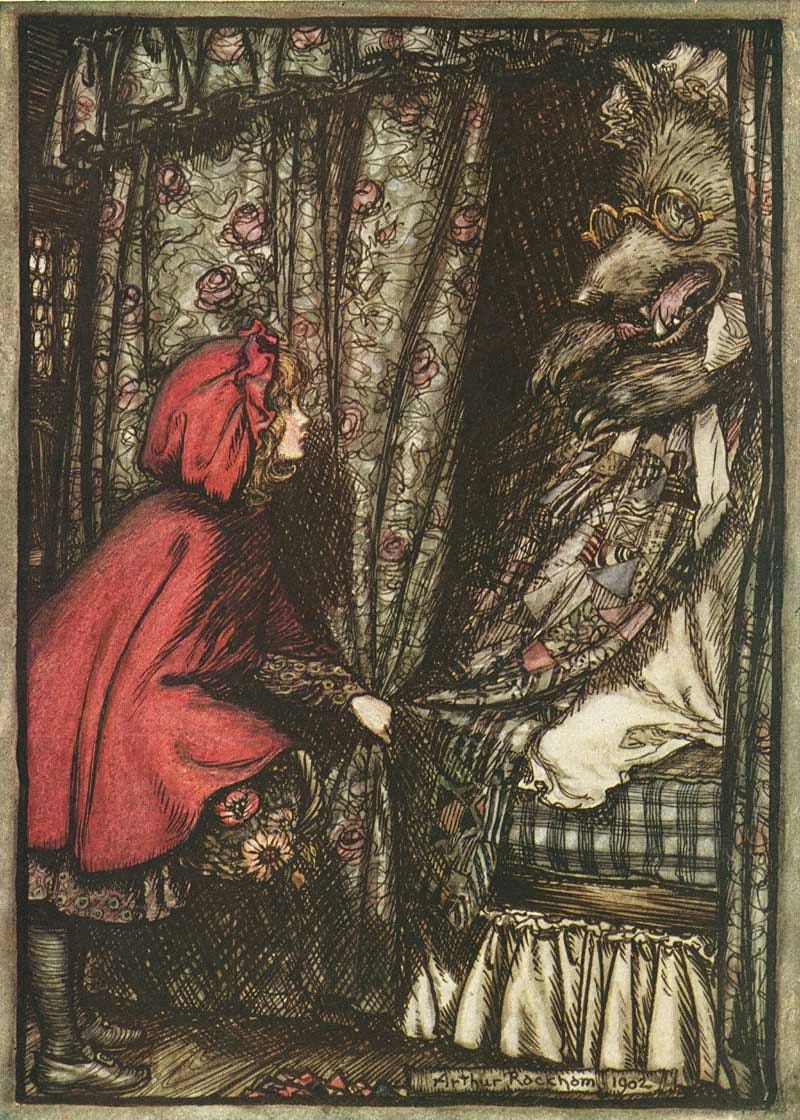
    It’s easy to see why, if you held these essentialist views, it would be a short step to viewing trans women with suspicion, because, from this perspective, biology is what matters and ‘biological’ males are intrinsically predatory. This is where all the absurd rhetoric about trans women invading women’s spaces comes from: in this view, a trans woman is a folk devil, a fairy-tale wolf dressing up as Grandmother to trick Little Red Riding Hood.

    So, in the essentialist view, this exploitation of one sex class by another is because men are fundamentally, intrinsically, and irredeemably oppressive. They are chromosomally and biologically dangerous and violent.

    Of course, in the most simplistic sense, this is kind of true. Most violence against women is perpetrated by men. We’ve all seen nature documentaries. Whilst these programmes tend to preserve and amplify society’s ideas, we can see sex-based differences in the roles male and female animals play and how they interact. There are exceptions, but in mammals in particular, males are usually bigger and stronger than females and tend to fight and fuck their way through life. They often seem less subtle, less nurturing, and rougher and more brutal than females of the same species.

    The traditional symbolism of spiritual traditions also says a great deal about male and female. This is often less about biological differences and more about very ancient ideas about the nature of maleness and femaleness. Tradition can also uphold the belief that male and female are rigid, mutually exclusive categories, each with a distinct, non-overlapping set of attributes, aptitudes, abilities, and desires.

    In Jungian terms, one central archetype is the Anima, the inner image of the feminine. It lives in the psyche’s symbolic realm and typically becomes active when a man struggles to express qualities he associates with femininity. Traits such as emotional sensitivity, aesthetic awareness, vulnerability, or intuitive openness may be suppressed because they conflict with internalised ideas about how men are supposed to behave. When this happens, he may project these disowned qualities onto any woman he becomes involved with, imagining her to embody emotional depth, grace, or nurturing warmth, regardless of who she actually is. The projection becomes a filter that shapes expectations more than a genuine relationship. This model is rooted in a heteronormative framework, though its underlying dynamics can appear in many relational configurations.

    A similar dynamic can occur with the Animus, the masculine archetype. A woman may project this inner figure onto a man and expect him to be strong, decisive, rational, or protective in ways that mirror her own unclaimed capacities. Cultural norms influence this process. Women may be subtly discouraged from traits such as assertiveness or authoritative clarity, making it easier to project those qualities onto imagined male figures rather than recognise them within themselves.

    Such projections are compounded by subtle yet deeply rooted forms of internalised misogyny and misandry, a mistrust of traits traditionally labelled as effeminate or masculine. Characteristics such as softness, expressiveness, and sensitivity may be seen not only as weak or effete but also as manipulative, contrived performances intended to appear non-threatening and sexually appealing to men in order to gain proxy power. In this distorted view, so-called feminine traits are regarded as both pitiable and dangerous, a deception masked as seduction. Likewise, men may be considered intrinsically and irredeemably cruel, callous, and predatory. These hidden mistrusts make the projected Anima and Animus not just idealised figures but vessels for contradictory, often hostile fantasies that encompass both adoration and contempt.

    Importantly, Anima/Animus projection is not confined to stereotypical gender roles or conventional partnerships. It can be just as influential in relationships between people who see themselves as progressive or psychologically aware. Even when we believe we have outgrown traditional roles, we may still respond to unconscious archetypes of masculinity or femininity rather than to the actual people we love. This is fundamentally problematic. It is a selfish, largely unconscious process that clouds reality, distorts connection, and often causes confusion and disappointment. Until we recognise and withdraw these projections, the relationship cannot genuinely develop between two whole, present individuals.

    Anyway, I am explicitly not trying to minimise the fact that men treat women badly or that there is structural, sex-based inequality. But rigid, negative projections about what men and women are like don’t solve anything. They just keep us stuck.

    Thanks for reading! Subscribe for free to receive new posts and support my work.

  • We Travel The Space Ways

    When thinking about the Western esoteric tradition and Hermetic Kabbalah, one often thinks of authoritative figures within a lineage, perhaps leaders or representatives of an initiatory school. These authorities produce various forms of writing, if they write anything at all. One form is a study or overview of their tradition, from an insider, sympathetic perspective, but one that places it in context. This might be a history or an academic translation of a classical text, with commentary or additional context. Another category of writing is the passing on of methods, techniques, or instructions for carrying out magical activities, whether rituals, meditation techniques, or what have you, that have a Kabbalistic basis. Umpteen books boil down traditional Golden Dawn-derived techniques, such as the Middle Pillar, pathworking, 777 correspondences, etc. Some of these are great, even when they are derivative. The last category, rarer, is books that offer intimate personal advice or reflections on Kabbalistic practice.

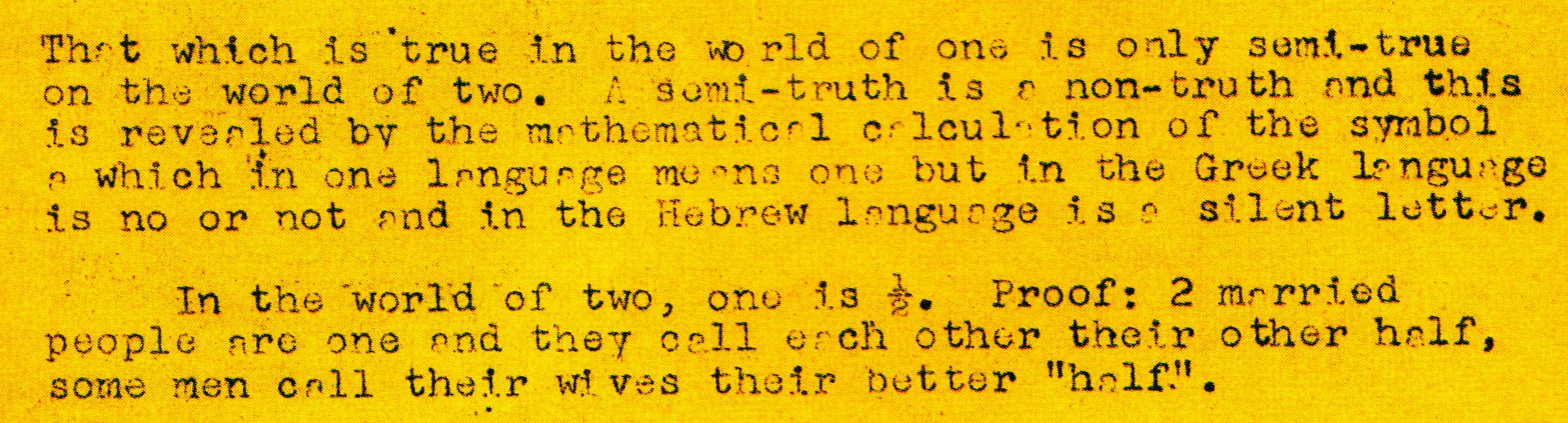
    Yet another approach, almost a genre in itself, is common in classical Jewish Kabbalah but much less so in Hermetic Kabbalah: the radical exegesis of existing writing through juxtaposition, numerology, acronyms, etc. These techniques include Notarikon, Gematria, and Temurah, and they have a long history. In fact, the core texts of traditional Kabbalah, including the Zohar and the Sefer ha-Bahir, largely follow this formula: a discussion and reverse engineering of a piece of scripture or holy saying to draw out and reveal hidden meanings beyond the ordinary, at different levels corresponding to the Four Worlds of Emanation, Creation, Formation, and Action.

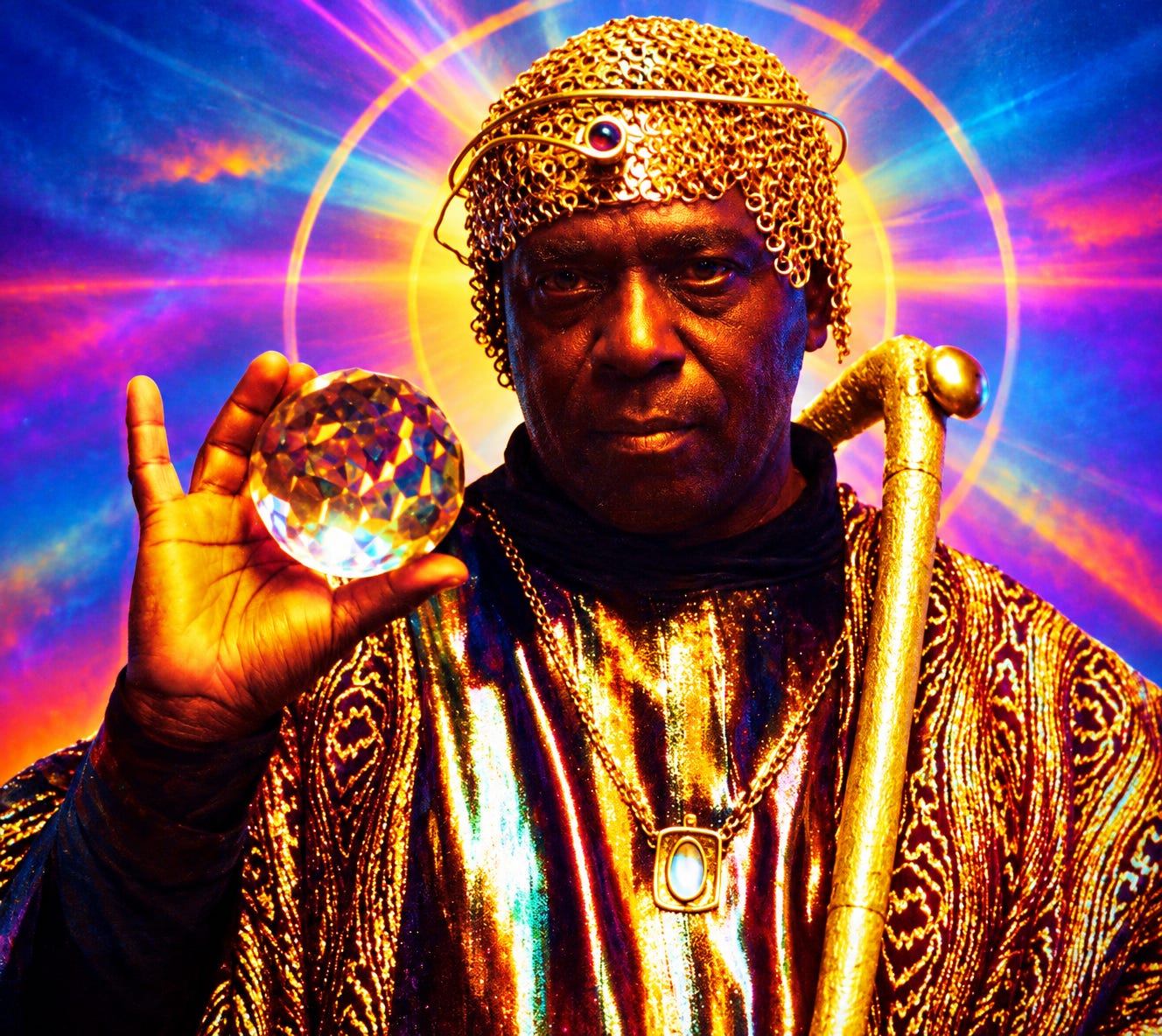
    One very surprising and inspired exponent of this technique was the eccentric jazz musician Sun Ra. I was turned on to his music in my late teens and enjoyed, and still do, many albums recorded with his Solar Arkestra band, ranging from pure cacophony to experimental synthesiser music to big band, and all shades in between.

    Sun Ra holing a crystal ball and holding a staff

    Sun Ra holding a crystal ball and staff

    Many years later, I came across his writings in two books, Prophetika and The Wisdom of Sun Ra, as well as anecdotes about his interest in magic and Kabbalah in the biography Space Is the Place by John Szwed.

    Sun Ra was born in 1914 in Birmingham, Alabama. He became part of the Chicago jazz scene. As a young man, he had a really, really odd experience. It sounds very much like an alien abduction story. Entities apparently took him to Saturn, or to a place he interpreted as Saturn. While there, he died to himself. He received an enormous amount of teaching, then spent the rest of his life expressing and teaching it through music, particularly very, very experimental jazz. So, you have someone who was not part of a traditional initiatory system, but simply had a calling to do the Work.

    except from a Sun Ra manuscript

    An excerpt from a Sun Ra manuscript

    Using these esoteric techniques to draw out the secret meaning of scripture and traditional writings carries potential risks. A key part of developing one’s intuition is recognising signs in daily life and reading synchronicities. However, this can be overdone. If the symbolic side is overstimulated, it can lead to a kind of semiotic arousal, seeing patterns and meaning in everything. If this process accelerates too quickly without enough grounding and integration, it can split the soul’s upper and lower aspects, resulting in utter madness.

    This interplay between inspiration and convention is essential. It is what shapes and sustains spirituality. But our spiritual traditions can become culturally conservative, overly reverent, and ossified like stone. To genuinely inspire, they rely on a raw, mystical connection and direct experience. Evidently, this rawness can also be disruptive, creating tension because inspired revelations may be borderline heretical, if not overtly revolutionary, or at least challenging. They might not fit in with established teaching and received wisdom about what holy writing is supposed to mean.

    So proponents of these techniques walk a very fine line. Historically, many rules required deep knowledge of existing lore and law before people could learn the techniques that led to raw inspiration. They were radical, but not revolutionary.

    None of these considerations bound Sun Ra; he operated completely outside any organised religion. He was a magpie drawing on all traditions. Yet he used the techniques of revelation. He was a Master of the Holy Name, not part of a teaching lineage, self-taught through pure inspiration. He was using the same techniques of experimental Jazz to deconstruct, explore and rebuild spiritual motifs in the same way as musical motifs.

    He could have been a crackpot, and some people clearly thought he was, but what he came up with pointed toward a greater reality rather than getting lost in patterns and fragments. The space connections linked up in a way that made his life and other people’s lives more coherent, richer, and better. And, as I say, the quality comes out in the actual things said in the teaching. I’ve got a little quote from Sun Ra here:

    “Your wisdom will be when you say, ‘I do not know.’ Your ignorance will be your salvation. When you admit that you do not know. We the brothers of the cosmos will come to your aid and I will say to you, ‘Come, my brother, you are dear to me. I will take you to new worlds. I will take you to outer unseen worlds greater in splendor than anything the earth possesses… I am nothing. My symbol is the name of nothing, and yet I speak as a living pattern for the spirit of the universe.”

    Sun Ra didn’t have an extensive formal education, or part of an initiatory lineage (as far as we know) and yet the stuff pouring out of him was like Nag Hammadi scripture – on par with Thunder, Perfect Mind. Sun Ra is an inspiration – that’s all I have to say!

  • Seth and the 1970s Road to Space

    By Duncan Fleming

    I recently wrote about the idea of the Hidden Masters, the flourishing of the Theosophical Society, and the many different places people can find spiritual authority. As well as receiving teaching from living, incarnated ‘masters’, there is the ancient tradition of entering a trance and acting as a ‘medium’ to channel the words of a non-physical entity.

    So, fast-forwarding about 100 years, to the 1970s, it is interesting to look at what had happened to the New Age spiritual tradition. Again, it was set apart from mainstream religion and mainstream science. We are no longer in a time when it is commonplace to attend séances, but it is still not unusual for people to believe in ghosts, Bigfoot, the Loch Ness Monster, UFOs, spontaneous human combustion and myriad weird shit. Think big coffee-table books of the unexplained. Under the hood, people still believed in lots of uncanny, spooky stuff. It is after the 1960s and the hippy movement. Many Eastern spiritual ideas are mainstream. It is normal for people to ask what star sign you are as a chat-up line. People talk about good and bad karma.

    There is also an immense arrogance, a conceit among some people who believe their particular New Age spirituality is the pinnacle of human evolution. I came across this chart from the mid-1970s, which purports to show the self-actualised Californian, beneficiary of the teachings of enlightened channellers, on the way to becoming post-terrestrial. It is the self-perfection fantasy of the entitled, on the genetic runway to space and beyond, to become interstellar planetary beings.

    Chart from 1970s showing spiritual evolution


    The great conceit of that fantasy is that it rests on an extremely crude and oversimplified idea of evolution. Africa is the hunter-gatherer person. And then you’ve got another wave of evolution, Southeast Asia, the tool-making person, who, bless them, can make pots and spears and stuff. And then the caste person in India, and all those naive and rather stupid monotheistic feudal people, who might be in Europe. But then America, because America’s where it’s at, you’ve got the socialised people, and then you’ve got the self-indulgent person (so there’s a little bit of self-hatred, a touch of self-loathing). So, as in older thought, there’s an idea of cosmic evolution and a vast hierarchical system, but it is now overtly racist. Although the seeds of that existed in some of the dubious racial evolution theories of Theosophy.

    It is certainly true that when people have genuine spiritual experiences, they feel part of a web of being that’s connected, purposeful, and has a sense of direction and growth. They feel they are going somewhere, that things will eventually get better, and that things are not arbitrary. But there is also a tendency to place whatever group one belongs to at the centre and the pinnacle of development. There may be a pole-star vision of where they will develop next, but they are at the vanguard of current human development.

    Then, as now, there remained traditional initiatory systems and broadly pagan communities, alongside a much looser New Age community. People who don’t want to commit to initiatory systems, and who don’t want to recreate a rustic, nature-based lifestyle, and who are happier mooching about in a city apartment. But they’ve still got a Will to a System, a desire to make sense of the ineffable. And what do they look for beyond acid trips and sci-fi novels?

    A notable example is the Seth Material. Jane Roberts and her husband, Robert Butts, began experimenting with ESP and Ouija boards in 1963. The material emerged from these early experiments, but it really blossomed publicly in the 1970s. Roberts was a pleasant and unassuming woman, and she found she naturally slipped into a deep trance and began speaking. She wasn’t someone who had particularly trained in this, or who was particularly witchy. It was those times, so she went with it. And her husband, being a very meticulous guy, dutifully transcribed everything that came from her mouth.

    The material they were receiving was really interesting. It began with different characters coming and going, and then a character kept returning. The quality of the teaching that came through this character was far more purposeful, coherent, and multi-faceted than they were used to. This character was called Seth.

    Paperback of Seth Speaks by Jane Roberts


    They published this material, and it became quite a phenomenon. There are many volumes of Seth material. They devoted the rest of their lives to conducting and transcribing these sessions. I think it is the most coherent and fully formed example of channelled works from that era.

    What is interesting about the Seth Material is that, if we are to take Jane Roberts at her word, she did not possess an encyclopaedic knowledge of esoteric philosophy. Yet the material presents a fully formed cosmology and epistemology, and it is internally consistent.

    The Seth Material is an example of hard idealism. Although it is internally consistent, it requires a substantial reimagining of the building blocks of reality to make sense of it. In this sense, it is not unusual, but it is quite pronounced. Many spiritual traditions treat consciousness as primary. Conscious awareness is seen as the space in which everything manifests. The world that seems to be ‘out there’ is understood to be an illusion: a trick of the mind. Time, space, and matter are regarded as transformations within consciousness. In this view, the statement ‘the universe is happening in me’ is taken literally, not just poetically.

    This is, of course, opposed to models that treat consciousness as an epiphenomenon, a by-product of complex brains, in which ‘I am happening in the universe’ is taken literally. It is not a minor difference. These outlooks sit at opposite ends of a spectrum: one prioritising the mind, the other prioritising matter. They meet only if the framing is altered.

    Seth was very clear about having had many human incarnations, having been a teacher, and having been physically incarnated at some point. This brings us back to the point that the only value in channelled or received works is the quality of the teaching someone receives, not the supposed authority of the source. Is it someone just writing thousands of pages of drivel about what life was like on Atlantis? (I’m looking at you, Charles Leadbeater.) Does it lead to any genuine developmental progress? And these personalities would also have to be reached and contacted. The amount of dedication required makes communicating such teachings an extremely demanding career, but it is one of the courses available.

    Anyway, I don’t have a big point to make, except to say that 70s New Age spirituality was, at its worst, queasy and repellent, and at its best, quite fascinating and inspiring.

    Thanks for reading! Subscribe for free to receive new posts and support my work.

  • Enough is Enough

    Some animals eat until they are full and then just stop. They don’t take more than they need. Maybe they evolved in an environment where there was always enough food, so it was advantageous to have an internal gauge of satiety to avoid taking in too much. Other animals keep eating and eating, as though they don’t know where their next meal is coming from. They eat more than they need to keep a reserve of energy in case food becomes scarce or sporadic.

    Humans are somewhere in between, and we can vary widely along this scale. We can graze or binge, and many people do both.

    Economies that rely on continuous growth and increasing consumption have long been criticised. Most of us understand that greed is NOT good and that too much can become too much. But our collective understanding of what is sufficient for us is less well established. Some environmental researchers have tried to identify a safe and healthy band of sufficiency between the minimum societies need to survive and flourish, and the point at which overconsumption becomes dysfunctional. It turns out that this is a really hard thing to figure out.

    I was struck by something I read by in Black Paths and Green Cathedrals.

    “define your own ‘enough’. Not society’s version, not what the adverts tell you, not the ‘success’ sold to you in magazines, but your personal, soul-deep enough.”

    I think this gets to the heart of the problem. We have to figure out our own sense of sufficiency as an antidote to dangerous overconsumption. It doesn’t seem to be entirely innate, and it’s certainly not always instinctive for us to stop taking more than we need.

    Addiction is a good example. Although it’s not easy and some people have to call on the help of a higher power, some forms of addiction can be completely turned off – like turning off the water in your house at the mains tap if there’s a leak. This is because you really don’t need certain addictive things in your life at all. They are not a wholesome aspect of human life. You don’t need to gamble, you don’t need to smoke crack. So it is possible to completely cut these things out of your life, and after an initial crisis, life can return to balance.

    Of course, with certain substances like alcohol or benzos, it can be more complicated than that. If your body is very used to them, you may be physically dependent, and stopping abruptly can be very dangerous. Even then, it is possible to undertake a managed withdrawal, turning the mains tap off slowly rather than all at once, and eventually eliminating that substance from your life completely if needs be.

    Sometimes it’s not as straightforward as switching off the mains, fixing the leak, then turning the supply back on. If you have been properly addicted to something, you may have permanently altered your nervous system to the extent that returning to safe use is difficult or impossible. At the very least, there may be a significant risk in trying to return to casual use. Some people have to go round the Wheel of Fortune many times before they accept this. The grooves and channels remain, and if you let the substance back in, things can unravel quite quickly. In those cases, complete abstinence may be the answer.

    But other forms of addiction are not so simple. Eating is the obvious example, and sex probably belongs in the same category. These are natural drives and aspects of a healthy human life. You tend to make yourself unwell if you try to abstain completely, certainly in the case of food. As Dion Fortune observed, it is better to have a perverted will than a repressed will.

    With this sort of addictive behaviour, the problem is not solved by elimination. The challenge is to stay within a zone of ‘sufficiency’ – recognising when enough is enough. We need to maintain awareness of our level of use within the cognitive loop and recognise our own green, amber, and red zones. Green is fine. Amber is a warning to be careful. Red is too much.

    In the Sphere of Foundation, or Yesod, on the Kabbalistic Tree of Life, there is a traditional association with this idea of sufficiency. There is a sense that, behind the scenes, reality is weaving itself together in mysterious ways that provide us with what we need. There is an obligation to trust in the sufficiency and self-righting nature of existence, and to cultivate awareness of the deeper reality that underpins physical life.

    Foundation is like the stream flowing from the river that nourishes the Garden of Eden. To experience Foundation fully, we must trust that we will receive what we need without grasping for it.

    A lot of compulsive consumption stems from anxiety. We worry that we won’t be able to cope with situations, feelings, or even the present moment without the external thing. Another drink. Another purchase. Another helping. Another distraction. We become convinced that we need it. But of course we can cope.

    Perhaps defining ‘enough’ is ultimately an act of trust. Trust that there will be enough. Trust that we are enough. And trust that we can let go of things that once seemed indispensable without losing ourselves in the process.

    Thanks for reading! Subscribe for free to receive new posts and support my work.

  • Who are the Hidden Masters?

    The late 19th century was a really wild time. Spiritualism had been on the rise since the 1850s. The edges of knowledge were shifting at remarkable speed. There were astonishing developments in science and a burgeoning industrial revolution, with amazing new technology. The first frontiers of psychology were being explored. It would have felt like a great time to be genuinely inquisitive and open-minded about the mysteries of existence – that there was still a great deal left to learn.

    In this climate, it was completely mainstream to believe in, or at least to be open-minded and inquisitive about, ghosts, spirits, and psychic phenomena. There were sceptics, but exploring these things was not considered anti-scientific. There were many séances and mediums, and there was extensive investigation of the paranormal. It was just a part of Victorian culture.

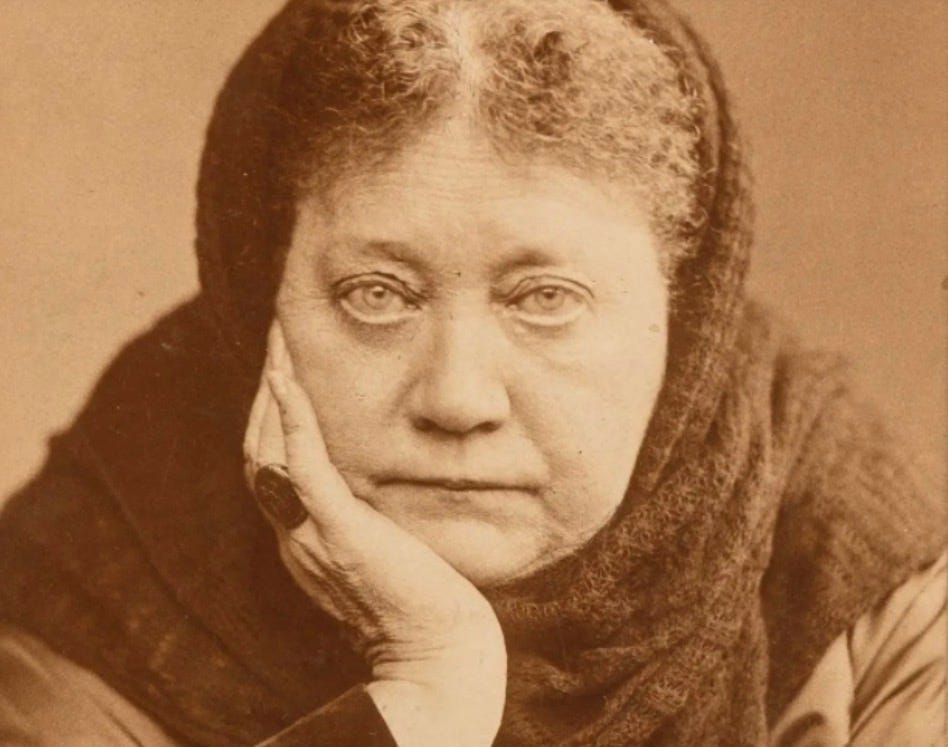
    The idea of hidden ‘Masters’ entered Western esotericism as a popular notion largely through the claims of Helena Blavatsky, one of the co-founders and the principal initiatrix of the Theosophical Society.

    Spiritual authority has got to come from somewhere. It doesn’t just come out of a vacuum. In a society where it was normal for people to believe in spirits and angels, there was enormous variety in where leaders of religious and spiritual communities got their ideas from. So the idea of a network of living, hidden masters was not the most ‘out there’ notion by any stretch.

    Blavatsky didn’t invent the idea of hidden masters out of nowhere, but she did make it much more of a coherent, synthesised idea. Eastern traditions already had long-established ideas about people thought to have reached an unusually high level of spiritual knowledge or power, often believed to live apart from ordinary society. The West also had notions of secret adepts and hidden brotherhoods, for example in the hermetic and Rosicrucian traditions, with figures like the Comte de Saint-Germain said to live for hundreds of years. There were also very old ideas that all religions contained fragments of one original, ancient and universal wisdom – sometimes attributed to Atlantis or other ancient civilisations.

    But what was quite novel about Blavatsky was rolling all this together into one coherent system. That there was an invisible hierarchy of super-advanced humans working behind the scenes to advance civilisation along spiritual lines – these secret leaders as a system, a network.

    So the idea of hidden masters was really amplified and clarified by the early Theosophical Society, as articulated by Blavatsky. They were not the only group to claim authority from living, highly adept individuals. The Hermetic Order of the Golden Dawn, founded in 1888, had the idea of semi-mythical Secret Chiefs – not easily encountered, except by the visible heads of the order – and similarly, it was this prime access, this direct channel, that gave the outward leaders of the organisation their authority.

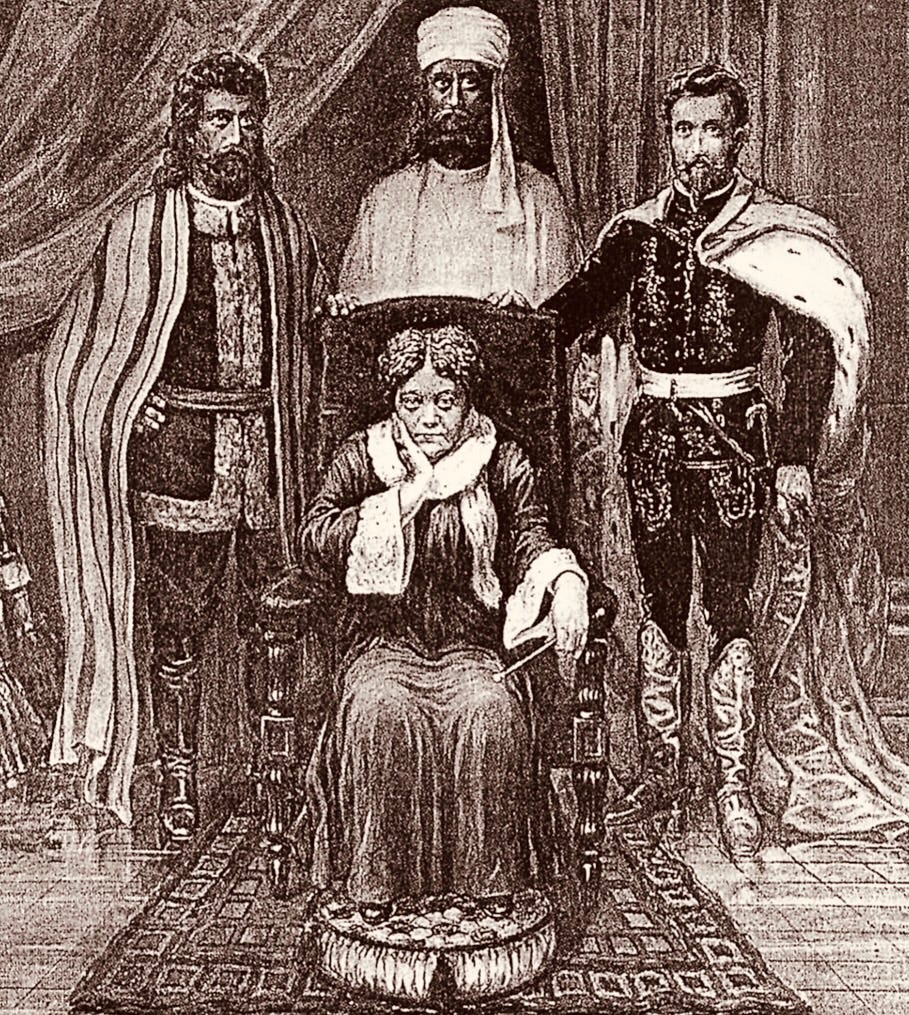
    In the Theosophical Society, these Hidden Masters were called Mahatmas – and they were thought of as ‘masters’ in the same way that a teacher in a school would be. They were masters not because of hierarchy in itself, but because they could teach you about spiritual reality. And they were described as being joined together in an inner fraternity that was guiding human evolution throughout history. The world was thought of as being guided by an inner government, an order called the ‘Great White Brotherhood’ overseeing the long development of life and consciousness. ‘White’ was meant in the sense of spiritual light rather than racially White, and indeed the majority of the Masters were considered to be from India and Tibet, etc. (Although undeniably there were some questionable ideas of racial evolution too).

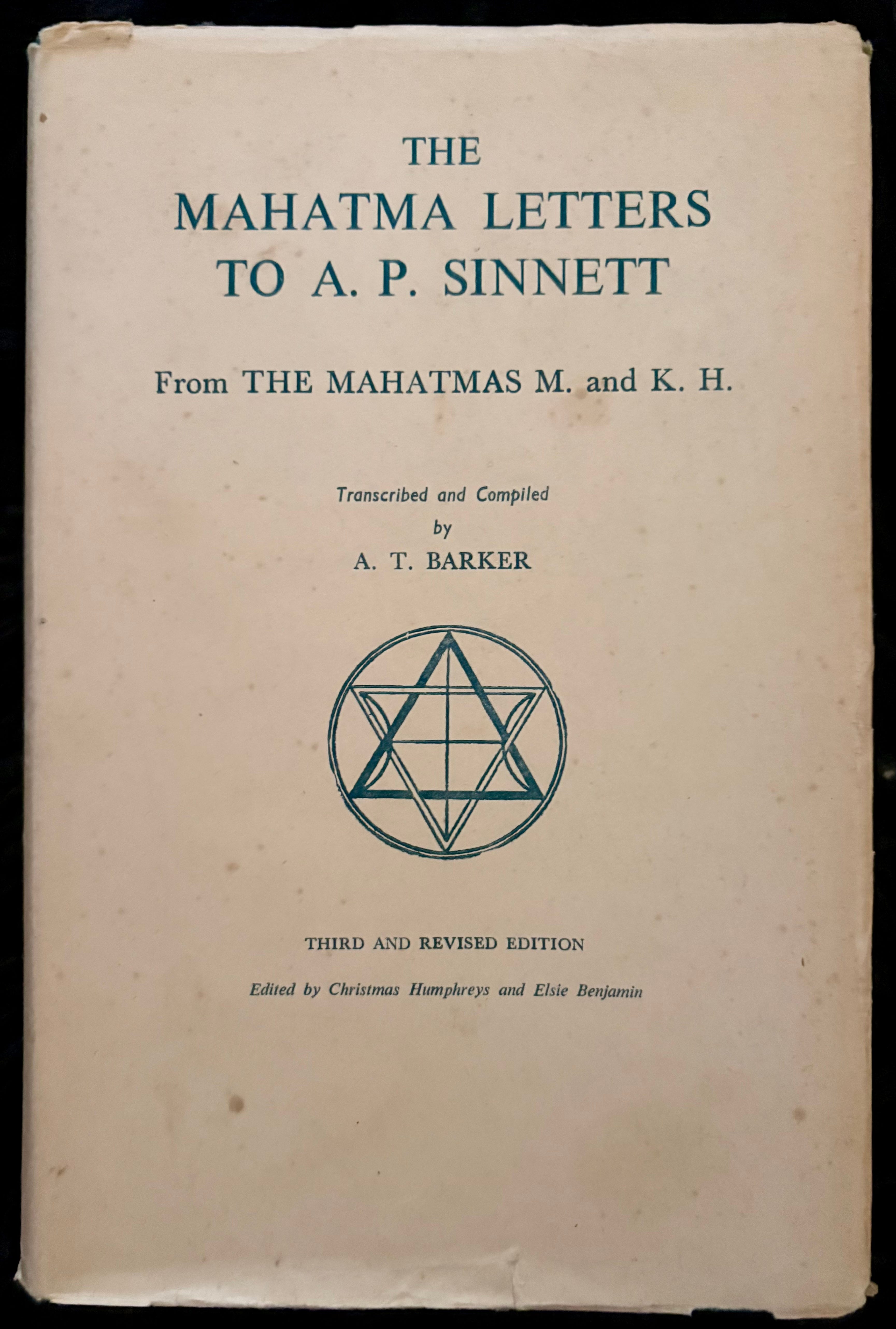
    One was said to communicate with these masters only rarely through physical meetings. It wasn’t unheard of to meet them in person, but most of the time there would be psychic contact, via a trance state in which one would receive information from them. There was also more extraordinary contact via precipitated or materialised letters that would physically arrive, though they would arrive via a mysterious aethyric process, rather than being delivered by the equivalent of the Royal Mail. As you might expect, questions about the authenticity of these precipitated letters became highly controversial.

    Everything about Helena Blavatsky was extraordinary. If we are to take her at her own word, before co-founding the Theosophical Society, she had led a very enigmatic life. She’d been like a bareback circus stunt horse rider. She had travelled the world and had been one of the few independent women to go to Tibet. She’d had a lot of adventures.

    It was also not unusual in that heyday of spiritualism for people to make a precarious living by holding private séances for wealthy people. There would have been considerable pressure on those who performed to produce spectacular evidence. The redoubtable practitioner Daniel Dunglas Home would put on astonishing shows, where trumpets might materialise in the air and play music, or rise high into the air, carried aloft by invisible entities. Of course, cynics would say it was very good stage magic – but there was an expectation that a ‘powerful’ medium or clairvoyant would be able to materialise unusual phenomena, such as plumes of ectoplasm from the mouth or nose. So there would inevitably have been considerable pressure on Blavatsky to prove she was in touch with a powerful spiritual current and to produce some of these phenomena.

    So those were the waters she was swimming in. It’s worth looking a little more into what she meant by a Mahatma or a hidden teacher. This is a quote from The Theosophist from 1884:

    “A MAHATMA is a personage, who, by special training and education, has evolved those higher faculties and has attained that spiritual knowledge, which ordinary humanity will acquire after passing through numberless series of reincarnations during the process of cosmic evolution, provided, of course, that they do not go, in the meanwhile, against the purposes of Nature and thus bring on their own annihilation.”

    Blavatsky said that from her childhood onwards, she was in contact with a tall Indian gentleman, Master Morya, who protected her. He saved her from a terrible horse riding accident as a teenager. She reported having a physical encounter with Master Morya when she would have been around 20 years old in London during the Great Exhibition of 1851, where he was visiting as part of the Nepal contingent. She approached him because she recognised him from her dreams, but he brushed her aside. However, he met her the next day in a London park, and he told her, for all her shortcomings, she was the best available person to bring his wisdom tradition to the West. So at this point she devoted her life to this mission. She was then put in touch with other Hidden Masters, who never gave their real names publicly.

    Not all the hidden Masters supported the idea of starting the Theosophical Society – many of them thought it would fail because it was open to all, rather than selecting the elite. Indeed, the Masters would often berate Blavatsky and others. Koot Hoomi, a prolific communicator, criticised Blavatsky in a letter, saying that by attributing to them phenomena of the most childish nature, she had lowered them in the public estimation. Sinnett, another co-founder of the Theosophical Society, was very intrigued by the purported letters and began a correspondence via Blavatsky. All the letters from Koot Hoomi to Sinnett have been published and are in the British Museum, but Sinnett’s side of the correspondence is now lost. The letters themselves are, apparently, quite physically odd at a microscopic level.

    Whilst the teaching of the Theosophical Society was enormously influential, it was still very controversial and divisive. The Society for Psychical Research at the time concluded that Blavatsky was a fraud, although their investigation would not be considered robust by modern standards.

    Whether or not the hidden Masters are real, they functioned as a kind of mythic organising principle for the ideas of theosophy. And yet they were considered human – they had a normal(ish) lifespan and personality quirks – and were also thought of as rare blossoms on an evolutionary tree. But it was possible for any human being to do work on themselves and elevate themselves to that level.

    Thanks for reading! Subscribe for free to receive new posts and support my work.