A few years ago, society seemed to be changing rapidly. Various kinds of personal differences seemed to be losing their stigma. It was becoming more socially acceptable to be neurodivergent, trans, or to have other kinds of difference. It felt like people could finally be a little bit more comfortable in their own skin. Primary-school-age children were discovering the edges of their identity, putting the jigsaw of who they were together in a freer way than before. Yes, there was an aspect of privilege in terms of formal diagnosis, because the waiting lists were so long that it was often only people with spare money who could get the ball rolling. But to me, it all seemed like a step in the right direction.
On some level, I was aware this may have been a bubble. I’ve lived in Bristol for many years, which is certainly perceived by the right-wing press as a hotbed of wokery. My paid work also exposes me to polar extremes of opinion. On the one hand, there are people pushing for greater inclusivity; on the other, I’m very aware of the sheer amount of hate-fuelled vitriol. Because it can be hard to judge what ‘normal’ people think, I looked to YouGov polls and similar sources to create a simulacrum of a semi-objective barometer of ordinary, changing opinion.
The backlash against this increased inclusivity has been harsh. When large numbers of people, especially younger people, began sharing and revelling in their differences, it made more socially conservative people feel as though the fabric of civilisation was falling apart. They couldn’t tell the boys from the girls anymore. They were being told off for using the wrong words. They were being told that people were autistic or ADHD, etc., in ways that seemed hard for them to understand, because, back in their day, people who were maybe a little odd didn’t have a label. And so, a large swathe of society set about actively re-stigmatising difference again, to keep people in their lane, back in their box. Kindness was reframed as weakness. There was more ‘enemy at the gates’ rhetoric. ‘They’ were taking over. There were also superficially empathetic versions of this narrative: the poor, mixed-up kids who were being taken over, hoodwinked by social contagion. Swarms of migrants were invading, taking advantage of our good nature. At the heart of this was phobia. An exaggerated fear, out of all proportion to any real danger posed by any marginalised group.
There is no perfect looking glass. Viewing the world through any single lens will inevitably introduce some distortion. The Marxist view is one such lens. I’m not talking about the dialectical model of change associated with Marxism via the philosopher Hegel, but about the basic notion of opposition in class struggle.
I was brought up with this view. My dad and his brothers came from the tenement blocks of Glasgow’s Gorbals district. They had experienced a lot of poverty. Their heroes were trade union activists. As a child, I spent Saturdays collecting food donations for striking miners. There was a war between the rich and the poor. It is incredibly incisive and energising to see life as a Manichaean struggle between two opposing forces of good and evil: the powerful exploiting and oppressing the weak, and the fight against evil.
Similarly, one of the tenets of certain strands of second-wave feminism is that there are two classes of humans, separated by biological sex, and that, at the most fundamental level, men are advantaged because they have always, and continue to, deliberately and systematically oppress and exploit women. This has recently become a massive pinch point in the form of differing, seemingly irreconcilable views on sex and gender. In fact, my oldest friend ended our friendship because I didn’t share her increasingly hostile views towards trans people.
This exploitation view goes beyond any one society being sexist or misogynistic. It is seen as something basic and fundamental. Any other perspective that appears to obscure this view of women as a sex class being exploited by men is viewed with suspicion, because it may be an attempt to minimise this exploitation for the benefit of men, who inevitably want things to stay the same so they can continue to gain advantage from it. This extends to suspicion of what would seem quite an innocuous and uncontroversial idea: gender theory, the idea that gender roles, identities, and expectations are shaped not so much by biological sex as by society, culture, and personal experience.
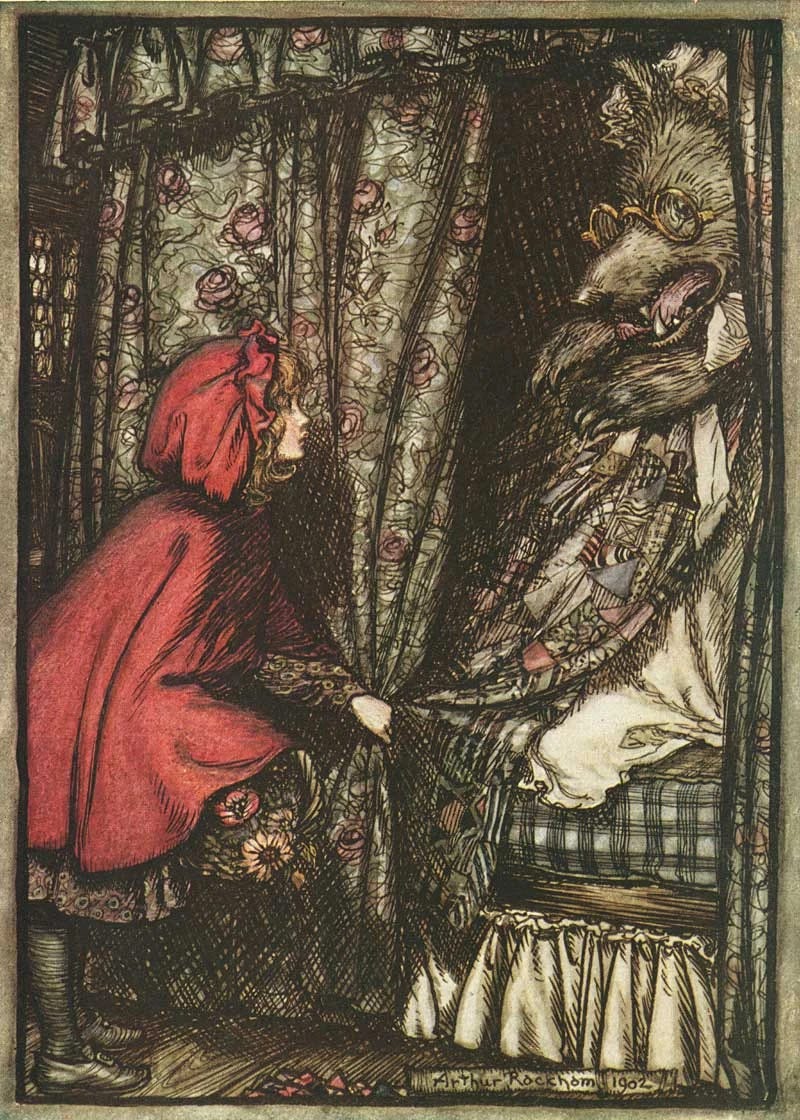
It’s easy to see why, if you held these essentialist views, it would be a short step to viewing trans women with suspicion, because, from this perspective, biology is what matters and ‘biological’ males are intrinsically predatory. This is where all the absurd rhetoric about trans women invading women’s spaces comes from: in this view, a trans woman is a folk devil, a fairy-tale wolf dressing up as Grandmother to trick Little Red Riding Hood.
So, in the essentialist view, this exploitation of one sex class by another is because men are fundamentally, intrinsically, and irredeemably oppressive. They are chromosomally and biologically dangerous and violent.
Of course, in the most simplistic sense, this is kind of true. Most violence against women is perpetrated by men. We’ve all seen nature documentaries. Whilst these programmes tend to preserve and amplify society’s ideas, we can see sex-based differences in the roles male and female animals play and how they interact. There are exceptions, but in mammals in particular, males are usually bigger and stronger than females and tend to fight and fuck their way through life. They often seem less subtle, less nurturing, and rougher and more brutal than females of the same species.
The traditional symbolism of spiritual traditions also says a great deal about male and female. This is often less about biological differences and more about very ancient ideas about the nature of maleness and femaleness. Tradition can also uphold the belief that male and female are rigid, mutually exclusive categories, each with a distinct, non-overlapping set of attributes, aptitudes, abilities, and desires.
In Jungian terms, one central archetype is the Anima, the inner image of the feminine. It lives in the psyche’s symbolic realm and typically becomes active when a man struggles to express qualities he associates with femininity. Traits such as emotional sensitivity, aesthetic awareness, vulnerability, or intuitive openness may be suppressed because they conflict with internalised ideas about how men are supposed to behave. When this happens, he may project these disowned qualities onto any woman he becomes involved with, imagining her to embody emotional depth, grace, or nurturing warmth, regardless of who she actually is. The projection becomes a filter that shapes expectations more than a genuine relationship. This model is rooted in a heteronormative framework, though its underlying dynamics can appear in many relational configurations.
A similar dynamic can occur with the Animus, the masculine archetype. A woman may project this inner figure onto a man and expect him to be strong, decisive, rational, or protective in ways that mirror her own unclaimed capacities. Cultural norms influence this process. Women may be subtly discouraged from traits such as assertiveness or authoritative clarity, making it easier to project those qualities onto imagined male figures rather than recognise them within themselves.
Such projections are compounded by subtle yet deeply rooted forms of internalised misogyny and misandry, a mistrust of traits traditionally labelled as effeminate or masculine. Characteristics such as softness, expressiveness, and sensitivity may be seen not only as weak or effete but also as manipulative, contrived performances intended to appear non-threatening and sexually appealing to men in order to gain proxy power. In this distorted view, so-called feminine traits are regarded as both pitiable and dangerous, a deception masked as seduction. Likewise, men may be considered intrinsically and irredeemably cruel, callous, and predatory. These hidden mistrusts make the projected Anima and Animus not just idealised figures but vessels for contradictory, often hostile fantasies that encompass both adoration and contempt.
Importantly, Anima/Animus projection is not confined to stereotypical gender roles or conventional partnerships. It can be just as influential in relationships between people who see themselves as progressive or psychologically aware. Even when we believe we have outgrown traditional roles, we may still respond to unconscious archetypes of masculinity or femininity rather than to the actual people we love. This is fundamentally problematic. It is a selfish, largely unconscious process that clouds reality, distorts connection, and often causes confusion and disappointment. Until we recognise and withdraw these projections, the relationship cannot genuinely develop between two whole, present individuals.
Anyway, I am explicitly not trying to minimise the fact that men treat women badly or that there is structural, sex-based inequality. But rigid, negative projections about what men and women are like don’t solve anything. They just keep us stuck.